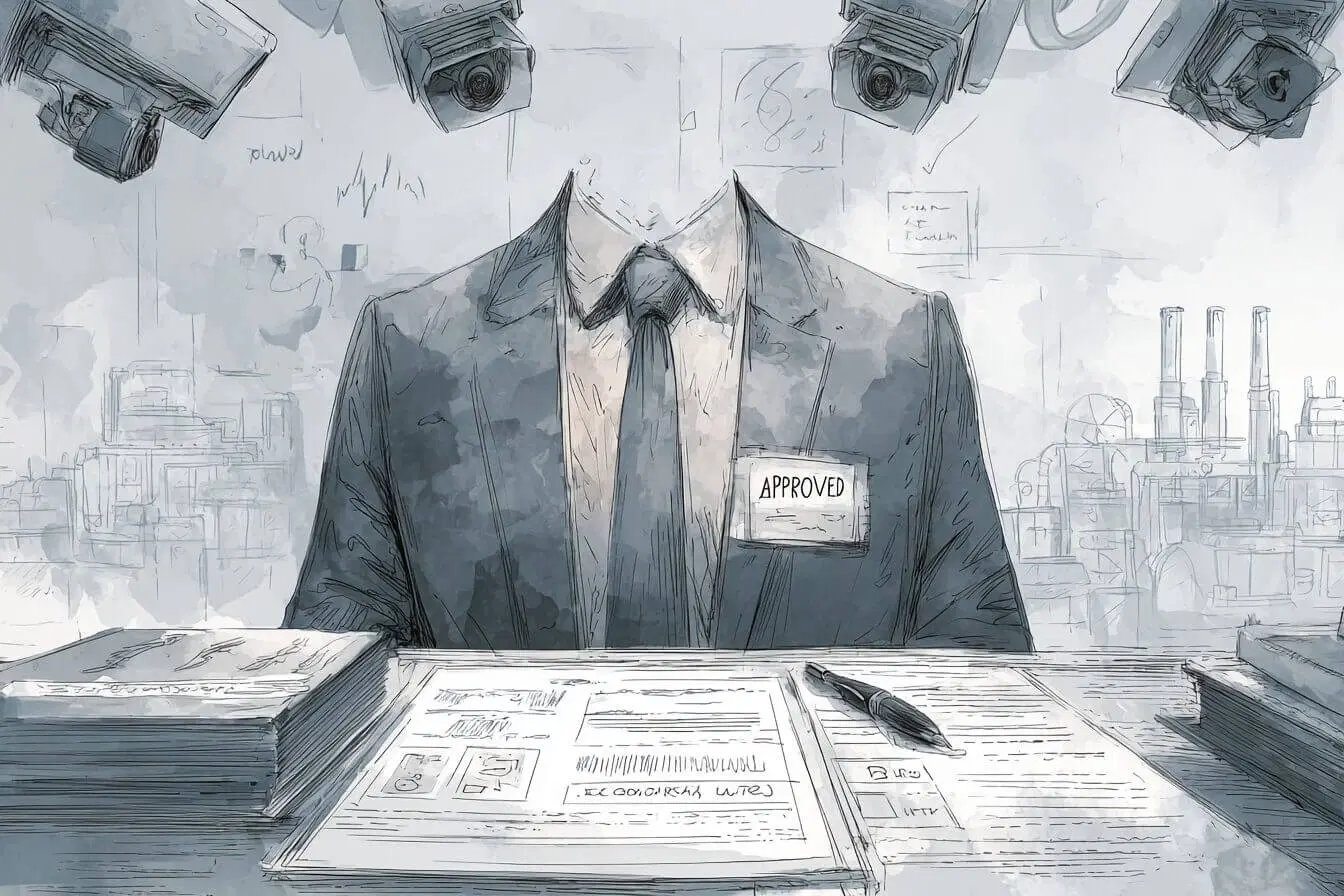
The Unknown Citizen

Published: 1939

In this poem...

  • An official report praises a man who lived a perfectly normal and compliant life.
  • It lists his job, opinions, and purchases as proof of his value to society.
  • His inner world remains a complete mystery, hidden behind all the data.
Cite
W.H. Auden icon

W.H. Auden

Poet Guide
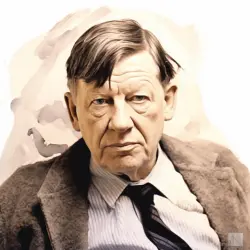
W.H. Auden was a celebrated and prolific British-American poet who also wrote essays, reviews, and plays.
Auden predominantly found inspiration in religion, politics, morality, and man's interactions with nature.

Key Poem Information

Central Message icon

Central Message: A life judged by rules is not a full life

Speaker icon

Speaker: A report

Poetic form icon

Poetic Form: Dramatic Monologue

Time period icon

Time Period: 20th Century

This poem quietly questions how modern society judges people by statistics and surface behavior. Auden uses a report-style voice to point out how easily individuality and emotion can disappear in a world run by systems and rules.

Emma Baldwin

Poem Guide by Emma Baldwin

B.A. English (Minor: Creative Writing), B.F.A. Fine Art, B.A. Art Histories

This is a 32-line poem that utilizes some different rhyming patterns. The poem contains examples of both skilfully written rhyming couplets and seemingly sporadic portions of verse that are variable in their end rhymes. It is impossible to escape the light-hearted nature with which intense subject matter is being tackled in the poem. In fact, the surprising rhyming couplets add to the humour that is pervasive in this piece. 

This poem may strike modern readers as familiar, as it bears great resemblance to the popular TV show, ‘Severance’. The tone is similarly cold and detached, largely focusing on data and statistics to define a person.

Before reading, it helps to know that this poem is written like a report from a government office. It talks about a man who did everything society expected, without asking who he really was. Pay attention to how formal and distant the tone is, and think about what is missing. This will help you see the quiet message Auden is trying to share about freedom, identity, and how we define a “good” person.

The Unknown Citizen
W.H. Auden

He was found by the Bureau of Statistics to beOne against whom there was no official complaint,And all the reports on his conduct agreeThat, in the modern sense of an old-fashioned word, he was a saint,For in everything he did he served the Greater Community.Except for the War till the day he retiredHe worked in a factory and never got fired,But satisfied his employers, Fudge Motors Inc.Yet he wasn't a scab or odd in his views,For his Union reports that he paid his dues,(Our report on his Union shows it was sound)And our Social Psychology workers found(...)
Poem Guide
Get PDFs

The Unknown Citizen The Unknown Citizen

W.H. Auden

Fully understand this poem faster with a Poetry+ membership and get the core resources you need in one place
The Unknown Citizen by W.H. Auden


Summary

The Unknown Citizen‘ by W.H. Auden describes, through the form of a dystopian report, the life of an unknown man.

The poem begins with the speaker stating the fact that throughout his life there was never one “complaint” against the citizen. No one thought badly of him, in fact, he was more like a “saint” than anything else.  The next section of the poem tells of the man’s popularity. He was well-liked by his friends, social enough to be normal, and dedicated to his work. The man served the “Community” for his entire life. The only lapse in his work for his company was when he went to serve in the “War,” and now, after he has died. 

The speaker also states that the man read the newspapers to a sufficient degree. He went to the hospital once, but left quickly, “cured,” as he should have been. The citizen consumed all the latest technologies, as a “Modern Man” should, and owned the proper devices. 

In the final section of the poem, the speaker concludes his report. He states that the man was “for” war when he was supposed to be, and for “peace,” when the government told him to be. The last lines prompt the questions a reader might have been wondering the whole time. Was this man happy? Was he free? These are things that the speaker sees as “absurd.” He states that, of course, the man was happy, the government would have “known” if he wasn’t. 

Read more poetry by W.H. Auden here.

Expert Commentary

Angel Nicolin

Insights by Angel Nicolin

Bachelor of Secondary Education in English and M.A. in English

What makes ‘The Unknown Citizen’ so effective is how it uses a flat, official tone to cover up something more disturbing. The poem never shows us who the man really was, only how well he followed the rules. Every detail comes from reports, surveys, and records, as if that is enough to define a life. This mechanical way of measuring a person is what Auden quietly challenges. The poem becomes a sharp warning about what happens when society values obedience and normality more than freedom or individuality.


Detailed Analysis

Lines 1-5

He was found by the Bureau of Statistics to be
One against whom there was no official complaint,
And all the reports of his conduct agree
That, in the modern sense of the old-fashioned word, he was a saint,
For in everything he did he served the Greater Community.

Auden has chosen to craft a speaker for the “Unknown Citizen” who is completely concealed, but strangely familiar. He speaks with a candidness and emotionless tenor which is hard to connect with. Once the identity of the speaker is a bit clearer though, one might come to recognize the faceless, seemingly lifeless person of a government worker or customer service representative. 

The speaker is going about his job, as he would any other day, and is not impacted by the facts he is relaying about the “unknown citizen.” The speaker’s lack of inflection is made up for by the rhymes which are pervasive in his speech. 

It was Auden’s goal in this piece to present the words of a dystopian narrator, to the tune of a rhyme. This contrast is quite forceful as the reader will discover throughout the poem’s 32 lines.

The speaker begins by introducing the main subject of the poem, who will never receive a name or proper identification. The reader will only come to know him through the facts that the “Bureau of Statistics, “the Greater Community,” and other fictional dystopian-sounding organizations, have seen fit to share.

The first thing of note that the speaker mentions is that there are no “complaints” lodged against this person. No one stepped forward, during their investigation, to say that he had done some wrong. All of the reports that this speaker has at his disposal tell him that the “unknown citizen” is a “saint.” His record is spotless and pristine. 

This poem certainly reads like a report and it is interesting to consider why these particular facts about this person’s life were chosen. What do these things really tell about someone? It is important to note that there is nothing deeper discussed in these lines. One cannot come to fully know the “unknown citizen” through this report, hence the irony between the title and the goal of the verses. 

Lines 6-14

Except for the War till the day he retired
He worked in a factory and never got fired,
But satisfied his employers, Fudge Motors Inc.
Yet he wasn’t a scab or odd in his views,
For his Union reports that he paid his dues,
(Our report on his Union shows it was sound)
And our Social Psychology workers found
(…)
The Press are convinced that he bought a paper every day

In the second set of lines, the report continues. Throughout the “unknown citizen’s” life, he did a number of things to serve the community. In fact, he spent his whole life “serv[ing] the Greater Community.” Capitalization is utilized throughout the poem to acknowledge bodies, or official groups that exist in the world of the poem. The citizen served the community up until the day he died. The only exception was when he went to fight in the “War.” Which war this is meant to be is not made clear. 

The citizen, 

…worked in a factory and never got fired, 

But satisfied his employers, Fudge Motors Inc. 

The man did as he was told, dedicated himself to his work, and was continually in the good graces of his employers. So far this person seems incredibly straightforward. There is not much more revealed besides surface-level details that anyone could infer. 

The man did not have any “odd views” and he always paid his “union dues.” He was on time with payments and was not strange in any way. That is to say, he did not believe in, or participate in anything, that went against the tenants of this dystopian feeling world. 

The man not only did well at work, but he was also popular with his friends. They were social and completely normal. One might at this point be suspicious of the total normalcy that filled this person’s life. Shouldn’t there be more there to see and learn about?

Lines 15-22

And that his reactions to advertisements were normal in every way.
Policies taken out in his name prove that he was fully insured,
(…)
A gramophone, a radio, a car and a frigidaire.
Our researchers into Public Opinion are content

The poem continues and the speaker refers to several other organizations that have been keeping an eye on the citizen. The “Press,” presumably a government-run news organization, reported to the speaker that the citizen, 

…bought a paper every day 

And that his reactions to advertisements were normal in every way. 

The man was as susceptible to advertising as he was supposed to be and committed to the news of the day. Continuing in the theme of this dystopia, it is quite likely his life was consumed with the propaganda produced by these agencies. It is hard to know who this person truly was with these purely surface-level details. 

Additionally, the man went to the hospital but did not stay long. He left “cured” just as he should. He was sufficiently healthy and sufficiently interested in acquiring all the appliances a “Modern Man “would need. He had, 

A phonograph, a radio, a car and a frigidaire.


Lines 23-29

That he held the proper opinions for the time of the year;
When there was peace he was for peace; when there was war he went.
(…)
Was he free? Was he happy? The question is absurd:
Had anything been wrong, we should certainly have heard.

In the final section of this piece, the speaker concludes his report on the “unknown citizen.” The researchers at “Public Opinion,” perhaps the government organization the speaker works for as he uses, “Our,” conclude that the man had all the “proper opinions.” The propaganda was doing its job and the man believed what he was meant to. He was an advocate for what the government told him to be, whether the was “peace” or “war.” 

The man’s personal life consisted of a normal wife, and “five children” that were “added…to the population.” The number was not too many or too few, it was just “right” for a man of his “generation.” 

The final lines of the piece bring greater attention to the absurdity of the poem’s premise. The speaker, as if defending himself, states that the “question” of whether the citizen was “free” or “happy” is absurd. He was certainly happy, otherwise, “we should…have heard.” 


FAQs

What is the main idea of ‘The Unknown Citizen’?

The central concept of this poem is the sacrifice of individuality that is necessitated by societies defined by corporations and compliance. Auden highlights the increasing dehumanisation of the individual as they are forced to become a small part of a large workforce.

What is the moral of the story in ‘The Unknown Citizen’?

The moral of this poem is to revolt against the dehumanising influence of corporations and embrace individuality. By taking this rising dystopian attitude to its extreme through hyperbole, Auden highlights the dangers of being a compliant and unquestioning part of a machine. This poem encourages readers to be sceptical about the motivations of corporations and governments who fail to acknowledge the individual.

What is the satire in ‘The Unknown Citizen’?

In this poem, Auden satirises capitalism, drawing attention to the dehumanisation of the workforce as every individual is stripped of their identity and forced to conform to a corporate template.

What is the main theme of ‘The Unknown Citizen’?

The themes which feature most predominantly throughout this poem are oppression, dehumanisation, and conformity. These themes are readily apparent through the title of the poem, which characterises the subject of the satirical elegy as someone who has lost all individuality and identity.

What is the meaning of ‘The Unknown Citizen’?

This poem is a satirical take on an elegy. Auden uses this to mock the corporate mindset and warn readers about the dangers of modernity. As the world evolves, it is becoming increasingly controlled by corporations who have no interest in the individual.

Poetry+ Review Corner

The Unknown Citizen

Explore an expert's insights on this poem. Join Poetry+ to instantly unlock fully understanding the poem.

W.H. Auden

72
W. H. Auden’s poetry often looks at the relationship between individuals and the systems they live under. 'The Unknown Citizen' stands out because it uses a cold, report-like tone to question what it means to be a good person in a modern world. It may not be his only major work, but it is one of his most studied and remembered, especially for the way it makes readers reflect on their own roles in society.

20th Century

65
This was published in 1939, a time when the world was facing political uncertainty and growing anxiety about war and control. The poem reflects those tensions by showing how a person’s life can be reduced to statistics and records. It questions how society defines success and goodness, especially when the focus is only on surface details and not on someone’s actual freedom or happiness.
To unlock full analysis, or join Poetry+

English

68
W. H. Auden was originally from England, and his background as an English poet shaped much of his early writing. Even though 'The Unknown Citizen' was written after he moved to the United States, it still carries the voice and tone of a British writer observing the modern world. His English roots are reflected in the poem’s structure and dry tone, even as it comments on larger systems that affect both American and British societies.
To unlock full analysis, or join Poetry+

Death

62
The poem reads like a formal report written after the man has died. Although it does not talk about his death directly, it is clearly a record created after he passed away. It treats death not as a moment of reflection or sadness but as an opportunity to evaluate his life like a checklist. It quietly questions what is lost when we only focus on statistics and public approval after someone is gone.
To unlock full analysis, or join Poetry+

Disappointment

58
Although the tone remains neutral throughout, the poem gives off a quiet sense of something being missing. The citizen may have done everything right, but there is no mention of joy, love, or anything deeply personal. His life feels empty in a way that is not directly stated but strongly felt. The poem leaves the reader with a lingering sense of dissatisfaction, as if checking all the boxes still does not make a life complete.
To unlock full analysis, or join Poetry+

Identity

65
This poem centers on the idea of identity and how it can be shaped by outside forces. Instead of describing the man’s inner world or personality, the poem lists facts from reports and records. His worth is defined by what others say about him, not by who he really was. The poem questions whether following rules and fitting in is enough to define someone’s life. It shows the difference between existing and truly being known.
To unlock full analysis, or join Poetry+

War

60
War is briefly mentioned as a part of the man’s life, but it is treated like just another civic duty. He served when told, and that alone is presented as a sign of good behavior. There is no emotion or detail about the experience, showing how war is used more as a record of loyalty than as something personal or meaningful. This reflects how governments might use war to measure obedience instead of bravery.
To unlock full analysis, or join Poetry+

Wellness

55
Wellness appears in the poem only briefly but tells us a lot about the way the man’s life is measured. He was insured, he went to the hospital when needed, and he left cured, all according to plan. There is no mention of how he felt physically or mentally. The poem treats health like a system to be tracked and maintained, showing how even something so personal can be turned into data by those in power.
To unlock full analysis, or join Poetry+

Confusion

66
The poem leaves readers with a strong feeling of confusion. We are given plenty of details about the man’s life, but none of them reveal anything truly personal or emotional. Instead, we are shown a list of facts from official reports. This makes us question what truly matters in a person’s life and why deeper questions are avoided. The poem captures how strange and empty life can seem when it is reduced to statistics.
To unlock full analysis, or join Poetry+

Contentment

61
The citizen is described as someone who had a life that seemed comfortable and without major problems. He worked a steady job, followed the rules, owned the right items, and raised a proper family. The report makes it seem like he was content because everything looked fine from the outside. But the poem leaves readers unsure if that contentment was real or just something assumed because no complaints were filed. It questions surface-level satisfaction.
To unlock full analysis, or join Poetry+

Frustration

63
The speaker’s refusal to answer simple yet important questions like whether the citizen was happy or free creates a quiet sense of frustration. The poem shows how systems might ignore the human side of someone’s life. It is frustrating to read about someone who did everything correctly but still feels like a stranger. The structure of the poem mirrors this feeling by never giving us what we are really hoping to understand.
To unlock full analysis, or join Poetry+

Sadness

57
While the poem is written in a calm, even formal tone, there is a sad feeling that comes from realizing how little we actually know about this man. The way his life is measured and described by numbers and reports instead of memories or emotions creates a distant, cold picture. It is sad to think that someone could live an entire life and still be a stranger, even to those who claim to know everything.
To unlock full analysis, or join Poetry+

Worry

59
There is a quiet sense of worry hidden in the poem’s tone. It does not come from the citizen himself, but from the speaker’s total trust in official records. The poem makes us worry about a world where people are seen only through reports and data. It suggests that something important might be lost when we stop asking how people actually feel. That worry grows stronger as the poem avoids anything truly human or emotional.
To unlock full analysis, or join Poetry+

Daily Life

62
The poem focuses a lot on everyday routines, like going to work, reading the paper, and owning household appliances. These parts of daily life seem simple and ordinary, but the poem uses them to raise deeper questions. It asks whether simply doing what is expected makes for a full and meaningful life. Auden shows how daily habits, when left unexamined, can become a way of disappearing into routine instead of truly living with awareness or choice.
To unlock full analysis, or join Poetry+

Individuality

54
Although the poem never directly mentions individuality, its absence is deeply felt. The citizen is defined only by how well he fits into society’s rules. There is no mention of personal thoughts, dreams, or choices. Auden uses this silence to raise a quiet but strong concern: when people are judged only by what they do on paper, their true selves can disappear. The poem becomes a reminder of how easy it is to lose individuality without even noticing.
To unlock full analysis, or join Poetry+

Industrialization

65
The citizen’s life is shaped by a society focused on work, order, and efficiency. He works in a factory, owns modern appliances, and does everything expected of him in a structured, mechanical world. The poem reflects how modern life, driven by industry and production, can reduce people to functions instead of individuals. Auden uses this to show how systems that value output over personality can slowly erase what makes someone truly human and unique.
To unlock full analysis, or join Poetry+

Life

53
The poem tries to sum up a man’s entire life through reports and records. It includes facts about his job, habits, and opinions, but nothing personal. There is no emotion, no memory, no story—just a checklist. Auden uses this to ask what a life really is. Can it be fully understood through statistics and approvals, or does that leave something important out? The poem makes us reflect on how easily life can become just routine.
To unlock full analysis, or join Poetry+

Mental Health

56
Mental health is not directly talked about in the poem, and that silence speaks loudly. The citizen went to the hospital and was declared “cured,” but there is no mention of how he truly felt. The poem treats health as just another box to tick. This absence makes us think about how systems often ignore mental well-being and focus only on surface behavior. It questions whether someone can be truly healthy if their inner life is overlooked.
To unlock full analysis, or join Poetry+

Money

59
Money plays a subtle but important role in how the citizen is judged. He is shown to be insured, a consumer of modern products, and financially responsible. These details are treated as signs of a well-functioning citizen. Auden shows how a person’s value can be measured by their spending habits, what they own, and how well they fit into the economic system. It becomes clear that money is one of the quiet forces defining his worth.
To unlock full analysis, or join Poetry+

Politics

64
Politics appears quietly but clearly in the way the citizen is described. He is praised for believing whatever the government needed him to believe, whether it was peace or war. He never questioned or opposed the official stance. This shows how deeply political pressure can shape someone’s identity. Auden uses this calm tone to point out how easily people can be controlled when they are rewarded for agreement rather than personal understanding or critical thought.
To unlock full analysis, or join Poetry+

Dramatic Monologue

65
This poem is a strong example of a dramatic monologue. The speaker is not the poet but a fictional voice, most likely an official or someone from a government department. He delivers a formal report about a man’s life, listing facts as if they are enough to capture who he was. This one-sided style gives the poem its cold and distant tone. It helps Auden point out how impersonal systems can sound when describing real people.
To unlock full analysis, or join Poetry+

Dystopia

63
The genre of the poem fits well under dystopia. It describes a world where a person’s worth is measured by rules, records, and official approval. The citizen is praised for doing everything right, but we learn nothing about how he actually felt. Auden uses this style to show how life in a future or controlled society could become lifeless and mechanical. It is a quiet but powerful warning about the loss of freedom and individuality.
To unlock full analysis, or join Poetry+

AABB CCDD

50
The rhyme scheme of ‘The Unknown Citizen’ can loosely be described as using rhyming couplets, especially in the earlier parts of the poem. That means many of the lines do follow an AABB CCDD pattern, where two lines rhyme back to back. However, this pattern is not consistent all the way through. Some parts do not rhyme perfectly, and others rely on near-rhyme or fall into a more casual flow. So while AABB CCDD is present in places, the overall rhyme scheme is irregular.
To unlock full analysis, or join Poetry+

No Regular Meter

63
The poem does not stick to a steady or predictable rhythm. Some lines are long, others are short, and the number of syllables keeps changing. Because of that, it fits best under the label of no regular meter. This lack of structure fits the tone of the poem, which sounds like someone reading from an official report. The loose rhythm helps Auden capture the mechanical voice of bureaucracy without making the poem feel too poetic or emotional.
To unlock full analysis, or join Poetry+

Get PDFs for this Poem

Log in or join Poetry+ to access unlimited Poem PDFs.

Get the ultimate PDF Guide to understanding poetry,
a One-Pager Snapshot, or a Poem Quiz PDF with answers.
Poem PDF Guide Visual
8.3K+ Total Quizzes Completed
10 Questions
2-5 min Avg. Time

🧠 Take the Quiz!

Test your understanding with instant feedback and detailed explanations.

Instant feedback & explanations
Join monthly leaderboard for prizes
Start instantly, quick & easy

Can You Beat This?

  • 1 🥇Guest-mc*****.7100%1:46
  • 2 🥈Guest-no***tl100%2:19
  • 3 🥉Mark David P.90%1:29
Emma Baldwin Poetry Expert

About

Emma graduated from East Carolina University with a B.A. in English, minor in Creative Writing, B.F.A. in Fine Art, and B.A. in Art Histories. Literature is one of her greatest passions which she pursues through analyzing poetry on Poem Analysis.
4 Comments
Most Voted
Newest Oldest
Inline Feedbacks
View all comments