

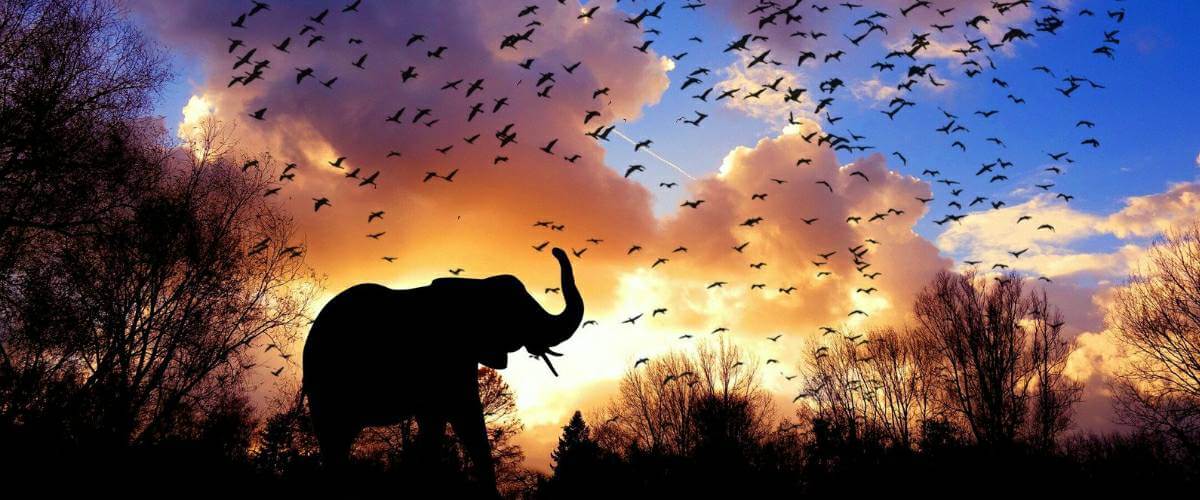

‘Love Cycle’ by Chinua Achebe portrays the sun’s effect on Earth (and vice versa) through the lens of a troubled relationship. The poem describes the couple: the sun, an angry male, and the earth, a tolerant female. Achebe uses personification and symbolism throughout the poem to evoke vivid imagery.
Prospective readers would likely benefit from reading a little about traditional Igbo culture, especially the significant role afforded to the sun in that tradition. Likewise, it is helpful to situate the poem in the scope of Achebe's wider career, as he composed the poem after a period of huge personal change, as well as circumstances including a civil war in his native Nigeria. If anyone is looking to better understand the poem, they can listen to this episode of Beyond the Verse.
Love Cycle Chinua AchebeAt dawn slowlythe sun withdraws hislong misty arms ofembrace. Happy loverswhose exertions leaveno aftertaste nor slushof love’s combustion; Earthperfumed in dewdropfragrance wakes(...)

 Get PDFs
  Fully understand this poem faster with a
Poetry+
membership and get the core resources you need in one place
Fully understand this poem faster with a
Poetry+
membership and get the core resources you need in one place
Summary
‘Love Cycle’ uses the pattern of the sun’s movement through the sky to explore the realities of a difficult and unbalanced relationship.
It goes on to describe the harshness of the sun as dawn gives way to noon. Here, Love Cycle relates the earth’s endurance of the sun’s scorching rays to the forbearance of a woman dissatisfied with her partner.
Towards the end, however, it speculates why she (Earth) remains in a relationship with him (the sun) and, therefore, why this natural phenomenon reoccurs. Love Cycle concludes by implicitly mentioning moonlight, a gentle reflection of the sun’s rays. The subdued nature of the sun at night gives Earth free reign over her partner. Love Cycle points to this moment as the reason she stays.
Expert Commentary

Insights by Joe Santamaria
B.A. in English and Related Literature, M.Phil in Irish Literature
Detailed Analysis
Stanza One
At dawn slowly
the sun withdraws his
long misty arms of
embrace. Happy lovers
‘Love Cycle’ opens with the persona describing the attitude of the sun at dawn. One can imagine the sun’s withdrawal from embrace to mean its light isn’t fixated on anything. This translates to how widespread and scattered the sun’s rays are at this time. Unlike at noon, the rays aren’t locked on any surface; they aren’t harsh as well. Hence, their representation is “long misty arms.” The adjective “long” reveals the far reach of the sun.
It is also worth noting the ways in which this opening alludes to the tactile portrayal of the sun commonly found in Homer’s Iliad and Odyssey. The sun is also an important figure in traditional Igbo culture, demonstrating the ways in which Achebe was able to blend different historical, cultural, and literary influences together.
Stanza Two
whose exertions leave
(…)
fragrance wakes
This stanza introduces the object of the sun’s influence: Earth. The persona portrays the interaction between the two entities as a relationship between a couple. As shown in the first three lines of the stanza, however, the nature of their relationship is dispassionate. The aforementioned lines mention the aftereffects of sex between the represented couple: it’s lukewarm. This reveals the irony in the last line of stanza one. In that line, the persona calls the sun and Earth “happy lovers,” but this stanza begs to differ.
From a different perspective, the first three lines also underscore the theme of nature by representing the attitude of Earth at dawn. In this case, “love’s combustion” refers to the heat of the sun, which is absent at this time. The stanza highlights the presence of dew—and, therefore, humidity—showing the freshness of Earth in the morning.
Stanza Three
to whispers of
(…)
of heaven and take it
In this stanza, dawn gives way to noon. Again, the persona portrays the sun as a man with a temper. Like his temper, the speaker predicts the “soft-eyed light”—representing the sun’s rays at dawn—will grow hot with time. The man “ploughing through the vast acres of heaven…” is a metaphor for the sun’s journey from the east, where it rises, to the west, where it sets. The speaker tells us that within that time, the sun will become harsh. The decision to use the ploughing metaphor speaks to the great effort taken by the sun, juxtaposing other solar deities, who are often portrayed as moving freely through the sky. This sense of struggle could reflect the fact things in the relationship are struggling or perhaps failing entirely.
Stanza Four
out of her in burning
(…)
she waits patiently
Employing the established metaphor, this stanza reveals Earth’s reaction to the sun’s harshness. Her attitude is one of patience and tolerance. “Burning darts of anger” refers to the scorching rays fixated on Earth, as the speaker predicted. The darts of anger also call back to other literary conflations of arrows & darts with desire, such as the arrows of Cupid or the “arrows of desire” mentioned in William Blake’s Jerusalem.
The earth absorbs the harsh light the same way the metaphorical woman tolerates her partner’s temper while swallowing her own. This stanza highlights themes of tolerance and patience.
Stanza Five
for evening when thoughts
(…)
over him.
As it concerns nature, the concluding stanza of ‘Love Cycle’ is speculative. Using the established metaphor, it reasons why Earth tolerates the sun’s harshness. From the metaphorical perspective, the woman stays in a clearly unhealthy relationship because her partner’s gentleness returns at night. The tone of the stanza indicates that the man becomes mellow because he wants her to make love to him. At this point, the theme of power plays comes in. The woman takes comfort in these moments where she has full reign over her partner.
The metaphorical perspective provides a speculative reason Earth tolerates the harshness of the sun during the day. At night, sunlight becomes significantly gentle through the reflective surface of the moon.
The persona guesses Earth tolerates the sun for these moments of freedom and relief. Of course, it’s only speculation backed by the speaker’s power of imagination. As indicated by the title of the poem and the natural phenomenon explored, the events in ‘Love Cycle’ are recurring. In a sense, the poem never ends.
Structure
‘Love Cycle’ comprises five stanzas written in free verse. Each stanza heavily employs enjambment, creating fragmented lines occasionally punctuated to indicate a pause. Stanzas often end with incomplete sentences, which are completed in the next stanza. Love Cycle concludes with a full stop, which is belied by the fact the poem has made clear that the end of the poem will not signify the conclusion of the titular cycle.
Literary Devices
- Metaphor: Metaphor is a dominant device in ‘Love Cycle.’ The cyclic phenomena of sunrise, sunset, and Earth’s reaction to it are indirectly compared with a dissatisfying love affair. In the poem, the speaker refers to the sun’s rays using three different phrases. “Long misty arms” in stanza 1 and “soft-eyed light” in stanza 3 represent the gentle nature of the sun’s rays. “Burning darts of anger” in stanza 4 refers to the scorching rays present at noon. A metaphor also appears in stanza 2. Depending on perspective, “love’s combustion” represents sex or the heat of the sun. In stanza 3, the poem compares “heaven,” an aerial space, to land, by giving it a unit of measurement.
- Personification: Personification wouldn’t have been possible without metaphor in ‘Love Cycle’. Referring to the sun and Earth as a human couple already bestows human characteristics on them. Throughout the poem, these entities exhibit attributes and actions common to man. For example, in stanza 2, the Earth wakes up; between stanzas 3 and 4, the Sun vents his anger on Earth.
- Irony: Considering the state of the represented relationship in ‘Love Cycle,’ the title of the poem is ironic. This irony resurfaces between stanzas 1 and 2. The persona calls the sun and Earth “happy lovers” right before describing their dispassionate affair.
- Synaesthesia: This poetic device associates attributes of the five senses with each other. It is evident in stanza 3, where the sense of sound is associated with sight: “…whispers of soft-eyed light…”.
- Enjambment: Enjambment runs throughout ‘Love Cycle,’ resulting in the fragmented structure of the poem.
FAQs
‘Love Cycle’ was first published as part of the collection “From Beware Soul Brother and Other Poems” in 1971. In that same year, it was republished in the United States as part of the poetry collection “Christmas in Biafra and Other Poems”.
The speaker is an unnamed but keen observer of nature; he may be the poet himself. In ‘Love Cycle,’ he presents himself as a sharp and speculative narrator of the natural phenomenon explored.
The tone is neutral. The speaker is indifferent to the plight of Earth and the actions of the sun. He is only narrating to readers about these events.
Romantic poems focus on and appreciate the power of nature while relating it to human life. ‘Love Cycle’ explores the interaction between two natural entities, comparing it with the ongoings in a human relationship. In this regard, ‘Love Cycle’ is a romantic poem.
While eros poetry paints a vivid carnal picture of its subject’s body and/or its persona’s lustful desires, ‘Love Cycle‘ doesn’t do that. The poem only mentions desire and its aftermath as a metaphorical tool for its main theme: nature. In this regard, ‘Love Cycle’ is not eros poetry.
About Achebe
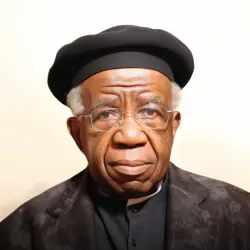
Born on 16 November 1930, Chinua Achebe was a renowned Nigerian novelist, poet, and essayist. He is majorly known for his debut novel, Things Fall Apart (1958), which is the face of modern African literature. A recipient of several national and international awards, Chinua Achebe, published short stories, poetry collections, and essays during his lifetime. He greatly admired Christopher Okigbo, an African poet who influenced Achebe’s craft.
From 1990 to 2009, Achebe taught at Bard College, after which he taught at Brown University for four years. Among others—and besides his debut novel—his notable works include Arrow of God (1964), A Man of the People (1966), and There Was A Country (2012). As he reveals in this discussion, Achebe believes in penning down the unfiltered truth—good or bad. He heavily exercises the aforementioned practice in his last book, There Was A Country.
Achebe lived 82 years and died on 21 March 2013.
Similar Poetry
You can check out more of Achebe’s poems and other romantic poems if you enjoyed ‘Love Cycle’:
- ‘Vultures‘ – a poem centering on the Belsen concentration camp and a commander working there.
- ‘Refugee Mother and Child‘ – a sad poem depicting the aftermath of the Nigerian Civil War.
- Ten of the best nature poems