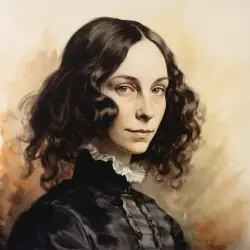

Sonnet 43: How do I love thee?

In this poem...

  • Browning declares a love that fills every dimension her soul can reach.
  • It meets quiet daily needs with steady presence.
  • That love is free, pure, and promised to grow even after death.
Cite
Elizabeth Barrett Browning icon

Elizabeth Barrett Browning

Poet Guide
Elizabeth Barrett Browning was a well-known Victorian poet.
She married fellow writer Robert Browning.

Key Poem Information

Central Message icon

Central Message: Love transcends earthly bounds, growing eternally stronger.

Speaker icon

Speaker: A devoted woman deeply in love, likely the poet to Robert Browning

Poetic form icon

Poetic Form: Petrarchan Sonnet

Time period icon

Time Period: 19th Century

Sonnet 43- How do I love thee? by Elizabeth Barrett Browning Poem Representation

This is a masterful sonnet that transforms personal constraints into a transcendent declaration of love, moving from physical dimensions through daily devotion to spiritual eternities, all while maintaining an intimate tone that makes universal emotions feel deeply personal.

Jamie Jenson

Poem Guide by Jamie Jenson

English Teacher, with a B.A. Honors in English and a M.Sc. in Education

‘How Do I Love Thee? Let Me Count the Ways,’ or Sonnet 43’ is one of Browning’s most famous poems. She is a renowned Victorian poet who managed to achieve acclaim in her lifetime. She went on to influence many British and American poets, particularly Emily Dickinson. A prolific writer, Elizabeth Barrett Browning’s poems came to the attention of another famous poet of the time, Robert Browning.

The two poets eventually married but were forced to wed secretly because of Barrett Browning’s father. He found out about the nuptials and disinherited his daughter. Barrett Browning and her husband moved to Italy, and both encouraged the other with their writings. She died in Italy at the age of 55.

This sonnet emerged from a remarkable love story. Elizabeth Barrett Browning was essentially a recluse, suffering from chronic illness, when Robert Browning first wrote to her praising her poetry. Their courtship flourished through letters before they secretly married against her controlling father's wishes, leading to her disinheritance. Understanding her physical limitations and family constraints makes lines like "soul can reach" and "freely, as men strive for right" particularly poignant. The poem wasn't intended for publication - it was part of a private collection Robert convinced her to share with the world, originally titled "Sonnets from the Portuguese" to mask their personal nature.

Get this Poem as a Printable PDF

Log in or join Poetry+ to access unlimited Poem PDFs.

Poem Printables
Sonnet 43: How do I love thee?
Elizabeth Barrett Browning

How do I love thee? Let me count the ways. I love thee to the depth and breadth and height My soul can reach, when feeling out of sight For the ends of being and ideal grace. I love thee to the level of every day’s Most quiet need, by sun and candle-light. I love thee freely, as men strive for right. I love thee purely, as they turn from praise. I love thee with the passion put to use In my old griefs, and with my childhood’s faith. I love thee with a love I seemed to lose With my lost saints. I love thee with the breath, Smiles, tears, of all my life; and, if God choose, I shall but love thee better after death.

Poem Guide
Get PDFs

Sonnet 43: How do I love thee? Sonnet 43: How do I love thee?

Elizabeth Barrett Browning

Fully understand this poem faster with a Poetry+ membership and get the core resources you need in one place


Summary

Sonnet 43′ by Elizabeth Barrett Browning(Bio | Poems) describes the love that one speaker has for her husband. She confesses her ending passion.

It is easily one of the most famous and recognizable poems in the English language. In the poem, the speaker is proclaiming her unending passion for her beloved. She tells her lover just how deeply her love goes, and she also tells him how she loves him. She loves him with all of her beings, and she hopes God will grant her the ability to love him even after she has passed.

Expert Commentary

Jamie Jenson

Insights by Jamie Jenson

English Teacher, with a B.A. Honors in English and a M.Sc. in Education

What strikes me most about this sonnet is how Barrett Browning transforms restrictions into expressions of limitless love. Reading it aloud, I'm moved by how the repeated "I love thee" builds like waves, each one revealing a deeper dimension of feeling. The way she measures love through physical space ("depth and breadth and height") feels especially powerful, knowing she wrote this while largely confined to her room. When she declares she'll love "better after death," it's not just romantic hyperbole - it's a defiant promise to transcend every boundary, even mortality itself. The poem pulses with quiet rebellion against all the forces trying to contain her love.


Themes

Browning engages with themes of love/devotion and relationships in ‘Sonnet 43’. From the first lines, it’s clear that this is going to be a love poem. She addresses her listener, likely her husband Robert Browning, and tells him that there are many reasons why she loves him and that she’s going to list them out. As the poem progresses the language becomes more figurative with the poet making various nature-based comparisons in order to depict her love accurately and movingly.

Death comes into the poem at the end as the speaker talks about the length and durability of their relationship. She hopes that God will allow her to love her partner even in death. It becomes clear at the end that her love is a spiritual one as much as it is a romantic one.

Structure and Form

‘Sonnet 43’ is classified as a sonnet because it contains fourteen lines of poetry and has a fixed rhyme scheme of abba abba cdcdcd.  This is the traditional pattern of a Petrarchan sonnet, one of the two major sonnet forms. (The other is the Shakespearean sonnet which rhymes ABABCDCDEFEFGG).The poem also makes use of the usual metrical pattern associated with standard sonnet forms, that is, iambic pentameter. this means that each line contains five sets of two beats. The first of these is unstressed and the second is stressed.

Literary Devices

In ‘Sonnet 43,’ Browning makes use of several literary devices. These include but are not limited to imagery, simile, and alliteration. The first of these is one of the most impactful literary devices that a poet can use. It can be seen through the poet’s ability to create images that appeal to or activate the reader’s sense. These are things that can be seen, touched, heard, or smelt in one’s mind. A good example comes from these lines “I love thee to the level of every day’s / Most quiet need, by sun and candle-light”.

There is a great example of a simile in this line: “I love thee freely, as men strive for right”. here, she compares the amount that she loves her partner to the strength with which men “strive” for what is right, or just.

Alliteration is an effective device that’s used to increase the overall rhythm and rhyme of a piece of poetry. For example, “purely” and “praise” in line eight.

Who is the Speaker?

One can assume, although it is not 100% certain, that Elizabeth Barrett Browning is also the speaker of the poem since it is well known just how deeply she and Robert Browning loved and cared for each other.  The speaker is talking directly to her beloved in the sonnet; she uses personal pronouns such as “I” and “you.” While the autobiographical nature of the poem suggests Browning herself as the speaker, the universal appeal of the sonnet allows it to transcend personal context, resonating with anyone who has experienced profound, unconditional love.

Detailed Analysis

Line 1

Based on the initial line, it appears that the speaker has been asked a question prior to reciting ‘Sonnet 43‘. The first line also serves as the motivation for the rest of the work.  Barrett Browning writes,

How do I love thee?  Let me count the ways.

She then uses the last thirteen lines of the poem to show just how much she loves her husband.

Lines 2-4

Lines 2-4 of ‘Sonnet 43‘ provide the first way in which the speaker loves her husband.  Barrett Browning writes,

I love thee to the depth and breadth and height

My soul can reach, when feeling out of sight

For the ends of being and ideal grace.

Here she is describing that her love is as deep and wide and tall as it can possibly be.  It is so deep and wide and tall, in fact, that she cannot even “see” the edges of it: it is infinite. Barrett Browning uses consonance in line two in order to convey just how much she loves her husband.  The repetition of the “th” sound gives the line movement, which signifies that her love for him is ongoing.

Lines 5-6

In the next two lines, Barrett Browning continues to show her husband how much she loves him.  She writes,

I love thee to the level of every day’s

Most quiet need, by sun and candle-light.

These lines are particularly lovely in their simplicity.  While her love knows no bounds, the speaker also loves her beloved in ordinary, everyday life.  She needs him as much as she needs other basic necessities of life.

Lines 7-8

In lines seven and eight, Barrett Browning writes of two other ways she loves.  She writes,

I love thee freely, as men strive for right.

I love thee purely, as they turn from praise.

These lines of ‘Sonnet 43′ give an innate sense of feeling to her love.  Just as men naturally strive to do what is good and right, she freely loves.  In addition, she loves him purely, just as men turn from praise in order to maintain humility.  The speaker does not want thanks or attention for her love; just like good and just men, she loves because it is what she has to do.  Using these two similes in these two lines strengthens the tone of love and adoration in the poem.

Lines 9-10

Barrett Browning continues with the pattern of showing how much she loves her husband.  She writes,

I love thee with the passion put to use

In my old griefs, and with my childhood’s faith.

Barrett Browning’s diction here is interesting, particularly because she is taking the feelings she has about something relatively negative and comparing it to the feelings she has for her husband.  Old griefs can be defines as anything that a person passionately despises.  She is telling her husband here that she has as much passion for him as she does for those things in life that she just cannot stand.  She also loves him with the faith of a child, which is a particularly lovely line.  Children’s faith is usually steadfast and true.  Just like a child has faith, so, too, does the speaker have love for her husband.

Lines 11-13

Barrett Browning continues with this religious motif in the next lines.  She writes,

I love thee with a love I seemed to lose

With my lost saints.  I love thee with the breath,

Smiles, tears, of all my life…

Her “lost saints” is a reference to all of those people she once loved and adored in her life.  The love she once felt for them, that she eventually lost, has now been transferred into the love she feels for her husband.  Additionally, she loves him with all that she is: her breath, her smiles, and her tears.  Barrett Browning confesses that she loves her husband with all that has made up her life.

Lines 13-14

Barrett Browning ends her poem by acknowledging that she is willing to love her husband forever if God chooses to allow her to do so.  She writes,

…and, if God choose,

I shall but love thee better after death.

Not only will she love him well into eternity, she writes, but she will also love him even better than she does presently.  Her love will continue to grow with the passing of time, regardless of whether or not she or he is still alive.  The speaker’s love for her husband is so strong that not even death could destroy it.

Historical Background

Elizabeth Barrett Browning(Bio | Poems) fell in love with Robert Browning(Bio | Poems) after he reached out to her about her writing.  The couple wrote letters back and forth to each other before finally marrying, knowing full well that the marriage would not be accepted by Barrett Browning’s father.  Their marriage was not only one filled with love but also respect for each other’s writings.  The two were each other’s biggest supporters, and so it is no surprise that Barrett Browning would include this sonnet in her collection titled Sonnets From the Portuguese, so titled because Robert Browning often referred to his wife as his little Portuguese.

Similar Poems

Readers should also seek out Browning’s other love poems, such as ‘Sonnet 29’ and ‘Sonnet 14’. Her husband, Robert Browning, also wrote some interesting love poems. These include ‘Love in a Life’ and ‘Parting at Morning’.  Other poems that are related to Browning’s ‘Sonnet 43,’ include I Said to Love’ by Thomas HardyLove Poem’ by Elizabeth Jennings, and ‘The Definition of Love’ by Andrew Marvell.

Poetry+ Review Corner

Sonnet 43: How do I love thee?

Explore an expert's insights on this poem. Join Poetry+ to instantly unlock fully understanding the poem.

Elizabeth Barrett Browning

76
This sonnet is one of Barrett Browning's finest and most famous poems. The poet was well known for her use of the sonnet form but the depth of the devotion evoked in these lines surpasses anything else the poet produced and, arguably, than any poet produced in this form aside from Shakespeare. The lines are regularly quoted in marriage services and the poem remains a powerful declaration of romantic love.

19th Century

90
This sonnet exemplifies 19th-century Romantic ideals, celebrating personal experience, deep emotion, and spirituality. Barrett Browning’s Romantic expression intertwines with Victorian restraint, capturing the era’s fascination with unbounded love and devotion. Her passionate intensity reflects a quintessentially Victorian belief in transcendent, eternal love beyond earthly bounds.
To unlock full analysis, or join Poetry+

English

89
Browning’s English heritage contributes to her poem’s reserved yet fervent tone, blending Victorian and Romantic sensibilities. Her cultural context reflects an era deeply committed to ideals of love, loyalty, and faith, each emphasized within 'Sonnet 43.' This Victorian backdrop informs her devotion, making the sonnet a timeless reflection of English values in love and spirituality.
To unlock full analysis, or join Poetry+

Death

78
Death serves as a backdrop against which the speaker’s love grows stronger, highlighting its endurance. Browning’s wish to “love… better after death” implies that her devotion surpasses mortality, casting love as eternal. This perspective suggests that the ultimate love transcends life’s end, a notion aligned with Victorian romanticism and belief in the soul’s immortality.
To unlock full analysis, or join Poetry+

Love

87
A sonnet is a form most commonly associated with love and Browning makes full use of it with this stunning and endearing poem. The opening line has become iconic (and hilariously misquoted by roger Rabbit!) In a way few other poems have this captures the enormity of the feeling of being in love. In essence, she has managed to embody an emotion that many don’t have the words to define.
To unlock full analysis, or join Poetry+

Relationships

82
The relationship depicted here reflects an idealized, almost sacred union. The sonnet’s direct address to her beloved emphasizes a unique bond characterized by unconditional devotion. Browning views relationships as not merely romantic but spiritually enriching, a perspective both intimate and universal.
To unlock full analysis, or join Poetry+

Spirituality

75
Spirituality intertwines with love in this sonnet, framing it as a sacred devotion that transcends earthly confines. Browning’s reference to divine grace and eternal love implies that genuine love is an act of faith, elevating her affection beyond the physical to a profound, metaphysical experience.
To unlock full analysis, or join Poetry+

Contentment

72
Contentment is woven into the sonnet’s quiet reflection on love’s everyday presence. Browning’s mention of “every day’s most quiet need” captures a satisfaction that transcends romantic idealism. She views her love as fulfilling both grand spiritual desires and simple, daily comforts, suggesting that true love provides lasting peace and completeness.
To unlock full analysis, or join Poetry+

Faith

80
Faith is essential to the sonnet’s message, depicted as both spiritual and relational trust. Browning’s love is sustained by faith in God and in her partner, presenting it as an act of devotion to both. This faith allows her to envision a love that lasts beyond earthly existence, grounding her emotions in divine assurance.
To unlock full analysis, or join Poetry+

Gratitude

75
Gratitude, though understated, is evident in Browning’s reverent language. Her words reveal appreciation for the capacity to love so deeply and unconditionally. This sense of gratitude transforms the sonnet into a kind of thanksgiving for her relationship, as she treasures both her beloved and the act of loving itself, viewing it as a divine gift.
To unlock full analysis, or join Poetry+

Joyfulness

82
Joy flows through Browning’s words as she lists the many ways she loves her husband, creating an exuberant tone. Her love brings happiness and fulfillment, evident in phrases like “freely” and “purely.” The joy in her declarations reflects the deep satisfaction of loving and being loved fully, infusing the sonnet with warmth.
To unlock full analysis, or join Poetry+

Love for Him

98
This beautiful poem talks about the poet’s feelings when she thinks about her husband. According to the poem, she loves him like a day. Her love is free like the individual rights of men. Her love is not half-hearted. It’s full of passion that will sustain until her old age. There is an eternal quality of her love reflected in the last few lines of the poem.
To unlock full analysis, or join Poetry+

Passion

84
Passion permeates the poem, as Browning describes love with fervor and intensity. Each line contributes to an image of love that consumes and fulfills her, creating an almost overwhelming effect. Her portrayal of passionate love goes beyond sentiment, evoking a feeling so powerful it verges on sacred, making this emotion central to the poem’s impact.
To unlock full analysis, or join Poetry+

Afterlife

77
Browning’s contemplation of death reflects her view of love as eternal. She sees her commitment continuing beyond earthly bounds, a vision in line with Victorian beliefs about the soul’s immortality. Her pledge to “love… better after death” signifies love’s unbreakable strength, suggesting that devotion is one of the few forces that transcend life.
To unlock full analysis, or join Poetry+

Devotion

92
Devotion defines the sonnet’s tone, with Browning’s unwavering commitment vividly depicted in her promises of enduring love. Her language elevates love beyond mere affection, casting it as a sacred responsibility. This reverence toward love aligns with Victorian ideals of loyalty, presenting love as a moral, almost spiritual, pursuit worthy of a lifetime’s dedication.
To unlock full analysis, or join Poetry+

Marriage

75
Although marriage isn’t directly mentioned, the depth of Browning’s commitment implies a lifelong union. The poem’s dedication to her beloved captures the permanence and sacredness of marital love as understood in Victorian society. Browning’s expressions of loyalty and purity resonate with the ideals of matrimonial devotion, forming a poetic homage to wedded love.
To unlock full analysis, or join Poetry+

Valentine's Day

88
Among the most celebrated love poems, it is renowned for its passionate declaration and exploration of the depths of genuine, profound love. Given its emotional intensity and the eloquent expression of an all-encompassing love that transcends the physical realm, this sonnet stands out for its ability to articulate the vast and varied dimensions of love. It captures the unconditional and infinite nature of love, making it an unparalleled choice for expressing the deepest affections and reflections on love’s enduring power, especially in the context of Valentine's Day.
To unlock full analysis, or join Poetry+

Petrarchan Sonnet

87
The Petrarchan sonnet structure, with its lyrical balance between octave and sestet, enhances Browning’s love’s complexity. The sonnet’s formal iambic pentameter conveys solemnity, while the traditional rhyme scheme abba abba cdcdcd emphasizes the poem’s theme of constancy and grace. This formal structure mirrors the disciplined yet passionate nature of Browning’s devotion, reinforcing its depth.
To unlock full analysis, or join Poetry+

Lyric

80
As a lyric, 'Sonnet 43' distills Browning’s personal emotions into universal expressions of love. The genre’s focus on introspection allows her to explore her relationship’s spiritual and emotional dimensions without distraction. The lyric form, traditionally suited for expressions of deep feeling, encapsulates Browning’s passionate intensity, revealing the depth of her devotion in a relatable yet elevated manner.
To unlock full analysis, or join Poetry+

Get PDFs for this Poem

Log in or join Poetry+ to access unlimited Poem PDFs.

Poem Printables
Get the ultimate PDF Guide to understanding poetry,
a One-Pager Snapshot, or a Poem Quiz PDF with answers.
Poem PDF Guide Visual
25+ Entries for this Poem
10 Questions
2-5 min Avg. Time

🧠 Take the Quiz!

Test your understanding with instant feedback and detailed explanations.

Instant feedback & explanations
Join monthly leaderboard for prizes
Start instantly, quick & easy

Can You Beat This?

  • 1 🥇Guest-ne*****24100%0:49
  • 2 🥈Guest-sra*********ari100%1:46
  • 3 🥉Guest-***100%1:53
Jamie Jenson Poetry Expert

About

Jamie Jenson brings over eight years of experience teaching middle and high school English. With a BA in English Literature and an M.S. in Education, he's also worked as a government social media writer. His sharp editing skills and love for literature shape his accessible and engaging poetry guides.
10 Comments
Most Voted
Newest Oldest
Inline Feedbacks
View all comments