


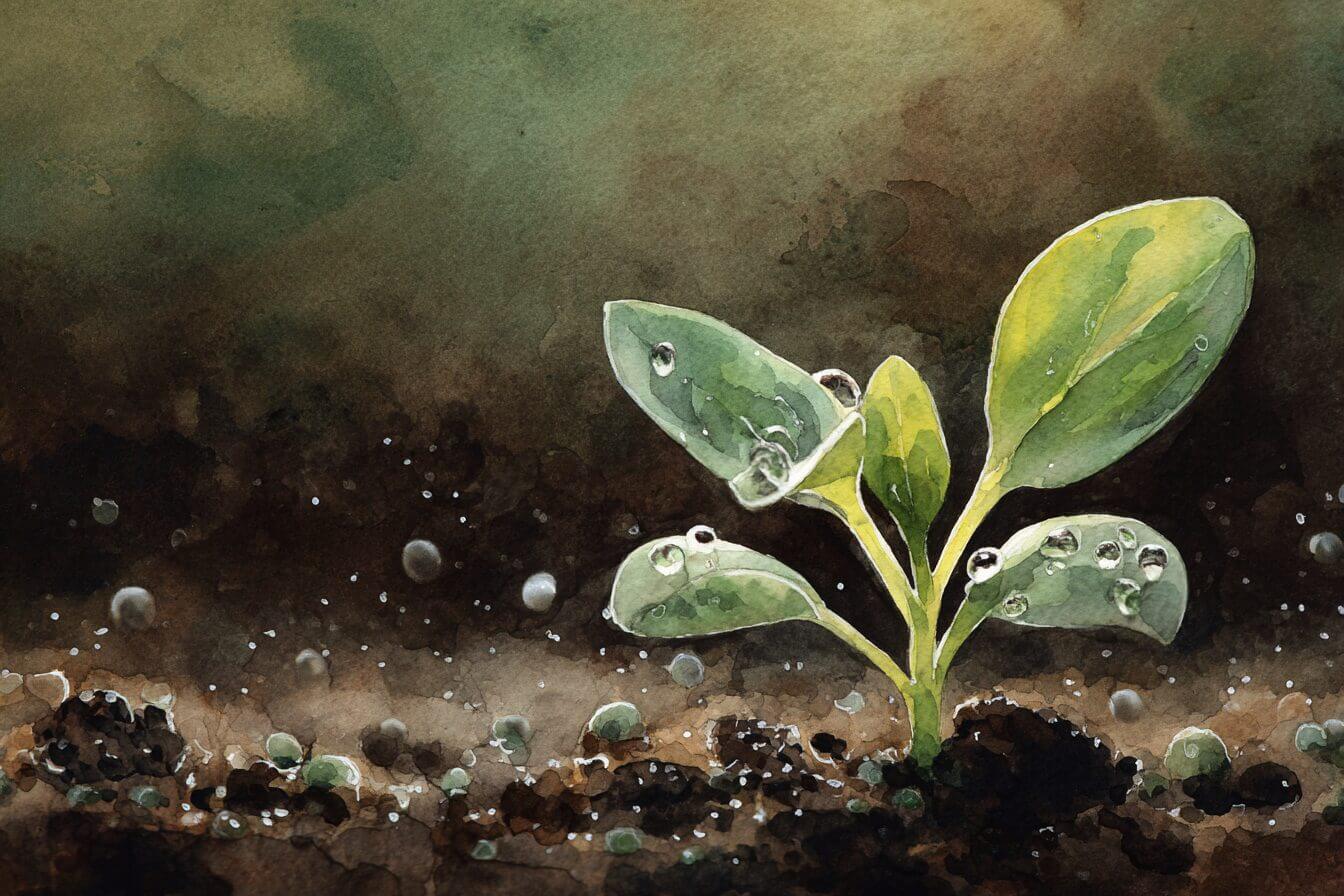

‘The Garden’ uses a garden as a metaphor for a couple starting a relationship, and the struggles that they face within. The speaker is recalling a difficult time in their life with the benefit of hindsight. This poem can be read either completely as a metaphor or as a story that has symbolic meaning.
The only thing that the reader really needs to understand is the metaphor of the garden as a way to express the relationship. Understanding that helps to make the meaning of the poem much clearer, and the melancholic tone makes more sense.
The Garden Louise GlückI couldn’t do it again, I can hardly bear to look at it—in the garden, in light rain the young couple planting a row of peas, as though no one has ever done this before, the great difficulties have never as yet been faced and solved—(...)

 Get PDFs
  Fully understand this poem faster with a
Poetry+
membership and get the core resources you need in one place
Fully understand this poem faster with a
Poetry+
membership and get the core resources you need in one place
Summary
Tinged with a sense of sorrow and regret, ‘The Garden’ recalls the speaker’s memory of a past relationship and the first signs that something was wrong.
In the first line of the poem, the speaker states that they can hardly bear to even “look” at a memory, before describing the painful recollection. The first stanza serves as an introduction to the memory, warning the reader how difficult they find it.
As the poem continues, the speaker describes the couple working in the garden and the way that they interact with one another. There is a sense of discord as they disagree about whether or not they should stop, but then they make a “truce.” At the end of the poem, the speaker reveals that this couple is at the start of their relationship and that they believe that they can overlook any problems that might seem to be presenting themselves. However, with the advantage of hindsight, the speaker knows that ignoring this sadness is a mistake: one that will doom the relationship.
Expert Commentary

Insights by Giles Towler
BA (Hons) in History and English Literature from Manchester University
Structure and Form
Written in free verse, this poem has a rambling, loose feeling to it. The reader gets the impression both of the speaker sharing their observations as they watch the couple and of the manner of their memories running through their mind, as though they were alone and looking back on a faraway time.
There are seven stanzas to this poem, and they each differ in length. The first stanza, a simple statement from the speaker, is the shortest, at two lines long. The fourth, sixth, and seventh stanzas are all tercets with lines of differing lengths. The lines of the final stanza are noticeably shorter than those in other stanzas.
As well as the stanzas differing in length, the meter of the poem differs throughout. There is no regular meter at all in the poem, and no rhyme scheme, adding to the naturalistic feeling of the poem. Enjambment is used to run lines together, as though mirroring the speaker’s thoughts or their memories.
Literary Devices
As the speaker creates a scene that is both filled with physical descriptions and emotion, they use imagery, symbolism, irony, enjambment, juxtaposition, allusion, metaphor, and foreshadowing.
- Imagery: The image of the garden in “light rain” creates a mood for the poem, making it feel slightly depressed. The descriptions of the couple add a sense of tenderness to the scene, but the speaker’s descriptions help to add a sense of regret.
- Symbolism: The garden symbolizes growth in the relationship and the work that is required in order to achieve this. The rain represents renewal, while also representing sorrow.
- Irony: The sense of irony in this poem could be said to be aided by hindsight. The speaker is looking at the scene with knowledge of their own, so that when they see the couple thinking that they are the first to behave in a certain way, they can see naivety in this feeling. When the couple overlooks the problems in their relationship, the speaker also has hindsight to understand that these problems should not be overlooked.
- Enjambment: Enjambment is used throughout the poem to run one line into the next, giving it a feeling of the speaker’s stream-of-consciousness.
- Juxtaposition: The couple is at the start of their relationship, but this is juxtaposed with the idea of departure as the woman’s hand leaves the man’s face, hinting at trouble ahead for them.
- Allusion: Using a garden in this poem could be seen as an allusion to the Garden of Eden. This would mean that the garden can represent innocence, but also an innocence that will be lost. It would also make the couple Adam and Eve, showing how they believe that they are “the first,” but also that it cannot last.
- Metaphor: The garden itself can be seen as an extended metaphor for the couple’s relationship. It needs work to grow, and the rain represents the tears in the relationship that aid this. The man wants to continue with it at a point where the woman wants to stop, and this leads to trouble.
Themes
On the surface, it might seem as though the garden is the main theme of this poem, meaning that nature and the way that people interact with it are the central idea. This is certainly something that is observed throughout the poem, looking at the garden itself and its place in the natural world. However, there are other themes that are more integral throughout.
Relationships are probably the most important theme in this entire poem. As the speaker observes a couple in a garden, they describe their relationship, mostly just by explaining their interactions with one another. The speaker gives the impression that there is some sorrow ahead in the relationship, highlighting that they are reflecting upon a personal memory.
Detailed Analysis
Stanza One
I couldn’t do it again,
I can hardly bear to look at it—
This poem immediately opens with a striking tone of emotional exhaustion. The speaker’s confession, marked by hesitation at the end of line 2, establishes a tone of regret and sorrow. Their inability to “do it again” suggests that whatever “it” refers to – most likely a relationship, as the poem progresses – has left them permanently altered. The phrasing conveys not just sorrow, but a reluctant fear, created by the understanding that reliving this experience would be unbearable.
Even just the memory of this past incident is painful to them that they can “hardly bear” to even recall it. The abrupt ending of this stanza, with a hyphen, is a sign that the rest of the poem is the speaker’s recollection of a painful memory. It creates a sense of hesitation, marking the speaker’s reluctance to reopen old wounds. The fragmentary nature of the hyphen visually represents the speaker’s emotional break.
Stanza Two
in the garden, in light rain
(…)
been faced and solved—
Following on from the hyphen, the poem moves into the speaker’s memory. Though painful, this recollection is one the speaker can finally bear to face. The scene unfolds in a garden – a space that is both literal and metaphorical. Literally, it provides the setting for the couple’s shared labor, marked by the mutual task of “planting / a row of peas”. Metaphorically, it symbolises growth and renewal, requiring sustained effort to make something flourish.
The imagery of “light rain” softens the atmosphere, but also introduces a note of melancholy. Its quiet persistence makes the inevitable turn of the relationship feel like it has been building, rather than loss coming in the form of an unforeseeable storm. Through this, the speaker foreshadows an unfortunate turn.
The image of the young couple planting peas is rich with symbolism. Their act suggests care and optimism, but also a belief in continuity: planting something implies an expectation of future harvest. Tenderness and hope are implicit here, yet the rain taints this unspoken promise with sorrow.
As the speaker recalls this memory with added hindsight, this moment is shown through the lens of irony. What once seemed original and unique, the feeling that their love was unlike any before, now appears naive. The couple’s inexperience is mirrored in their gardening: they have yet to confront failure or learn how to nurture something through adversity. As a metaphor for their relationship, the image exposes their youthful certainty: they believed in the inevitability of growth without understanding the patience and resilience it demands.
Stanza Three
They cannot see themselves,
(…)
clouded with flowers—
From the speaker’s perspective of hindsight, the couple is depicted as lacking self-awareness. Absorbed entirely in their own act of creation, crafting their plans for the future, they fail to notice the world around them. Here, the “dirt” they work in becomes a metaphorical representation of the realities of life: while it can be nourishing, it is also raw and dirty. While it is symbolic of new beginnings as it nurtures new life, it is also a symbol of decay and impermanence. By beginning without the proper perspective, the couple invests all of their faith in the future, overlooking the necessary preparations to foster growth.
As the focus widens from the couple to their surroundings, the contrast deepens. Their absorption in one another isolates them from the natural world that quietly frames their intimacy. The “green” hills carry two contrasting symbolic meanings: on one hand, they represent growth and vitality; on the other, green suggests inexperience or naivety.
The metaphor “clouded with flowers” grants further complexity to the image. The abundance of blossoms bears connotations of beauty and temptation. While the couple concentrates on cultivating their own small plot, they remain blind to the plant life already flourishing around them.
The word “clouded” lends further credence to this, as it acts as a double entendre. It metaphorically likens the formation of the flowers to clouds, but it also bears connotations of obscuring vision: the vision of the couple has been “clouded” by their own ambition.
Stanza Four
She wants to stop;
(…)
to stay with the thing—
Conflict now enters the relationship, and the first signs of discord between the couple are shown. “She wants to stop” what they are doing – perhaps she is tired and overwhelmed, or perhaps her faith in their shared future is faltering. However, the use of a semicolon at the end of this line marks a denial of this desire to stop, replacing the period which would indicate the finality of this “stop”. This reflects their conflicting desires, which is shown through juxtaposition in the next line.
In contrast “he” wants to keep going, ignoring whatever misgivings she might have. He wants to see it through to the end, no matter what. Their aims seem to have diverged here, but he is ignoring it, and therefore ignoring the way that she feels. His focus on getting to the “end” has prevented him from being aware of the problems in the present.
Stanza Five
Look at her, touching his cheek
(…)
in thin grass, bursts of purple crocus—
The speaker re-enters the poem’s frame with imperative language: “Look at her.” This commanding use of direct address reminds the reader that what unfolds is being observed through memory. The line initially reads as tenderness, but carries an undertone of sorrow, foreshadowing the coming events for the woman.
By touching the man’s cheek, the woman is demonstrating physical intimacy in an attempt to make peace with him. Her literal action bears a metaphorical attempt to bridge the emotional distance between them. This does not address the problem, but simply represents her trying to placate him – a temporary solution characterised as a “truce”. In doing so, it exposes the fragility of their connection: physical affection remains, but the emotional connection is gone.
The description of her fingers “cool with a spring rain” deepens the emotional complexity. The “rain” functions as a sort of pathetic fallacy, symbolising her tears, suggesting the quiet aftermath of conflict. Meanwhile, the “cool” touch acts as a metaphor for emotional distance – there is no longer any warmth or passion in her physical touch.
The “spring rain” offers a hope for renewal, with the season of spring often symbolising growth and vitality.
Surrounding them, the flowers serve as a metaphorical representation of their relationship’s shifting nature. The crocus, a spring flower, symbolises the promise of renewal and the fragile hope that new life might emerge. The “bursts,” however, are purple – a colour which bears connotations of mourning. Together, the flowers encapsulate the paradox at the heart of their relationship: moments of hope are deeply intertwined with sorrow.
Stanza Six
even here, even at the beginning of love,
(…)
an image of departure
This moment of conflict unfolds early in the couple’s relationship, and that timing is crucial. The anaphoric repetition of “even” at the beginning of two consecutive clauses underscores how damning conflict is at this stage of the relationship. Even as they begin to plan for the future, the seeds of discord are already visible.
The woman’s attempt to placate him momentarily restores calm, but when her hand falls away from his face, the gesture serves as a metaphor for their separation. What seems a small physical movement becomes an act of foreshadowing: an early sign of the emotional distance that will later define them.
Stanza Seven
and they think
(…)
this sadness.
The tone here is ironic, even mocking, but there is also a touch of sorrow and regret to it, reminding the reader that the speaker recalls this memory with a great deal of pain. There is clearly a source of conflict between the couple, but they are both trying to ignore it. It is only with hindsight that the speaker can state that it should not, in fact, have been ignored. Whatever else happened in the relationship, the speaker now looks at this moment and marks the source of the rot that was to come.
This sharp tone is marked by the word “free”, which identifies a misplaced sense of entitlement in the couple. The speaker disparages them for thinking they were above “this sadness”. Notably, the word “this” when referring to the sadness notes the personal experience of the speaker, reminding readers that they are likely one of the two people in the couple.
With the advantage of hindsight, the speaker ends this poem with a tone of resignation. The couple is not “free” and will be doomed by their mistakes.
FAQs
The garden works as a metaphor for the couple’s relationship because when they go to work there, it shows unity and a shared goal, at least to start with. It is a new beginning, and they are working together to nurture it, wanting to bring new life to it. However, in a new garden, there is also a sense of vulnerability, and this is something that the couple seems to have ignored as they focused on the future of the plants that they were planting.
It is never explicitly stated exactly what happened to the couple in this poem, and it seems as though this has been left deliberately ambiguous so that the reader can draw their own conclusions. It is heavily implied that there were problems with the relationship early on, and the opening stanza seems to suggest that the relationship ended up being very painful for the speaker, but the way that the poem is written creates a sense of inevitable sorrow rather than focusing on the nature of the sorrow.
Different aspects of nature are used in the poem to reflect different aspects of the relationship. Spring rain early on in the poem represents hope and renewal, but also sorrow. It creates a melancholy mood while also seeming to hope for the future. The crocus flowers also represent hope and renewal, but they fade quickly, and so they show the transient nature of love. When the couple is surrounded by dirt, this is another symbol of growth but also one of decay. It also represents the work that is required, which the couple seems unaware of.
A number of contrasts in this poem show the promise of the start of the relationship compared with the negative way in which it ended. The hope of the early part of the relationship contrasts with the sense of hopelessness that the speaker feels when they look back. The sense of touch contrasts with feelings of separation, and the youthful naivety contrasts with the mature hindsight and sense of cynicism.
Although it is only subtle, there is a sense of gender dynamics coming into play in this poem. The woman wants to stop, but the man puts himself in a position of power and dominance, insisting that they should continue. It is the woman who has to placate the man, showing a sense of nurturing toward him, even if she has to give in to what it is that he wants to do, rather than doing what she wants.