


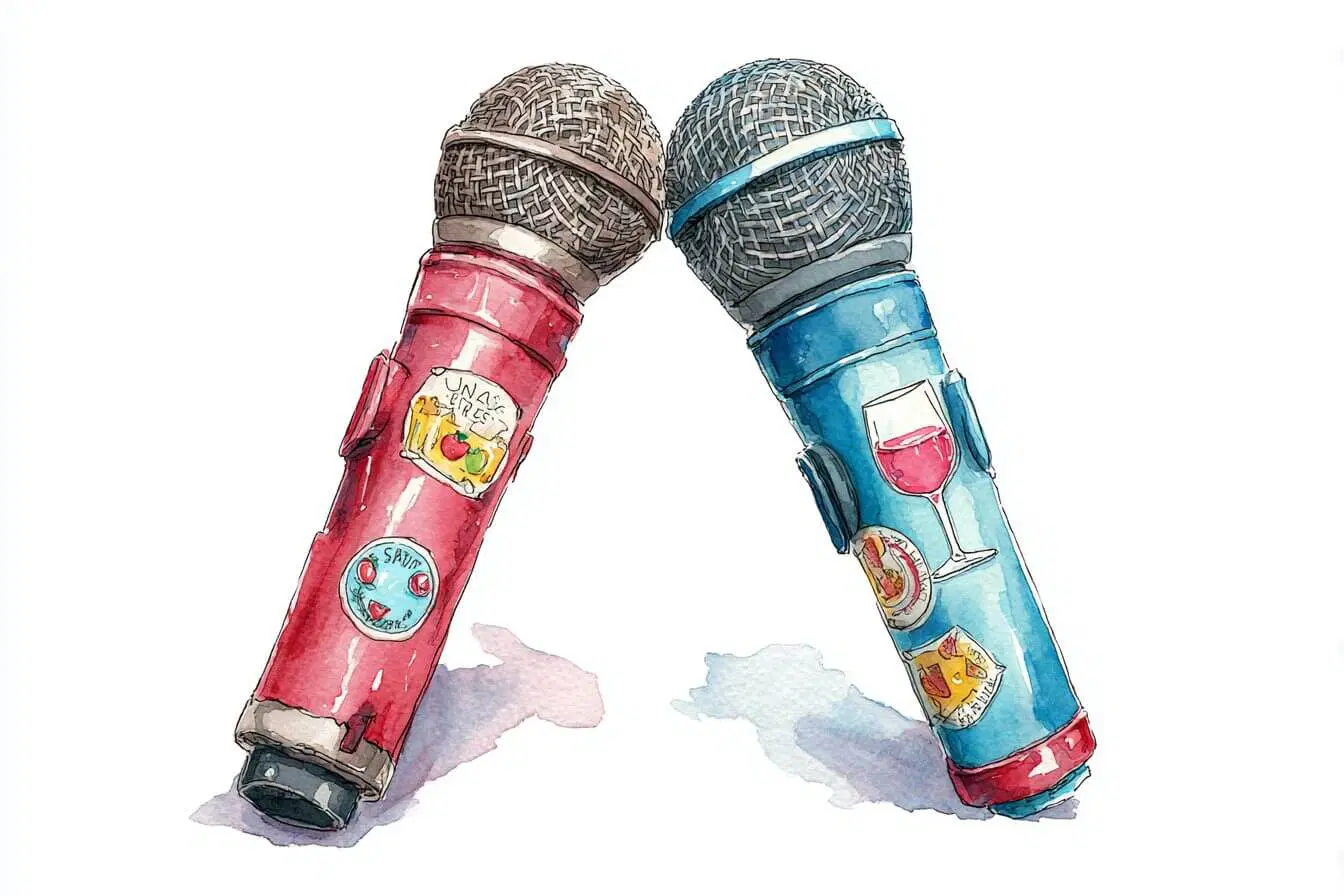

The poem is written in a musical style, using perfect rhymes and internal rhymes to make each line flow into the next. As such, it perfectly captures the harmony that one can achieve when they find their perfect match in love.
Most analyses of this poem are quick to assign a gender to the speaker, without any real indication as to the speaker's identity. However, this comes from a startling oversight: a disregard for the title itself. Read this poem as two different speakers, find a rhythm in the stanzas which feels like a distinct voice for each speaker, or which stanzas feel like both speakers together. There is no single correct answer to this, therefore it is a matter of personal interpretation. However, for this analysis, the first and final stanzas will be regarded as a shared voice between the two speakers. The second stanza is regarded as being narrated by a female speaker, while the third is regarded as being narrated by a male speaker.
Where We Belong, A Duet Maya AngelouIn every town and village, In every city square, In crowded places I searched the faces Hoping to find Someone to care.I read mysterious meanings In the distant stars, Then I went to schoolrooms (...)

 Get PDFs
  Fully understand this poem faster with a
Poetry+
membership and get the core resources you need in one place
Fully understand this poem faster with a
Poetry+
membership and get the core resources you need in one place
Summary
‘Where We Belong, A Duet’ by Maya Angelou is a simple poem that explores the never-ending search for connection of two speakers.
The first stanza opens as a duet – a male and a female speaker narrating together, showing that they both started looking for love in the same way. This search is exhaustive and seemingly fruitless, as they search settlements with increasing populations for their future partner.
The second stanza adopts the lone voice of the female speaker, who recalls her search for love. She searches the stars for a divine sign. Failing to find one, she visits, “schoolrooms”, “poolrooms”, and finally, darkened cocktail bars. Her search becomes increasingly desperate, losing her original intentions as she starts sleeping with strangers of whom she does not know the name. She recalls how she was “easy”, readily going home with men as she played the “romantic games”.
Stanza three adopts the voice of the male speaker, who similarly recalls his pursuit of love. He has “wined and dined” a thousand women, but experiences little luck. The venues which he searches become increasingly less populated, reflecting the exhaustive nature of his pursuit. Even when he does find partners, “forever” only lasts a few months.
The final stanza sees the two speakers united as they narrate together again. Their lives are now full of “light” and love, as compare each other to a “sunrise”.
Expert Commentary

Insights by Caitlin
B.A. Honours first-class division degree in English Literature and History
Structure and Form
This poem comprises of four stanzas, with the first being a sestet, the second and third stanzas consisting of eleven lines, and the final being a quintet. This is incredibly significant to the meaning of the poem. The two shorter stanzas are narrated by both speakers at the same time, as they recall the beginning of their search for love and the conclusion of their search, as they find each other. The two eleven-line stanzas feature the strenuous search of each speaker, showing that their struggles have been equal.
While the poem employs frequent rhyme, it does not adhere to a set rhyme scheme. In fact, some lines contain internal rhyme, which contribute to the musical quality of the poem. This is an important factor, as it reinforces the idea of a “duet” between the two speakers.
Literary Devices
In this poem, the poet uses the following literary devices:
- Anaphora: This device can be observed in the repetition of the word “In” at the beginning of the first three lines of the poem. This is used to create a sense of movement, as the speakers move from one settlement to another in search for love.
- Tricolon: Unusually, this device appears three times throughout the poem. Each of these instances occur separately across stanzas one, two, and three. Angelou restricts these to a tight format, with each instance of tricolon featuring places each speaker has searched for love. This contributes to the sense that their respective pursuits of love have been lengthy and exhaustive.
- Internal rhyme: Angelou uses internal rhyme to increase the musicality if this poem, which is important to characterise it as a “duet”, as the title would suggest. This can be observed numerous times throughout the poem, creating a cohesive effect.
Detailed Analysis
Lines 1-2
In every town and village,
In every city square,
The opening stanza sets the tone for the poem, posing a question to the reader: which speaker is narrating this stanza? This can be difficult as each stanza employs the first person. However, it is important to remember that there is no single correct interpretation of this. Counting the number of stanzas, it appears to make the most sense that the first and last stanza are a joint experience. Both speakers have undertaken these actions. This aligns with the second clause of the title, ‘A Duet’, which is a musical performance by two people, which often features joined verses and solo verses. As such, the musical tone and rhythm of the poem becomes quickly apparent.
Angelou employs tricolon through the words “town”, “village”, and “city”, which all originate from the same lexicon. The populations of each settlement get progressively larger, reflecting the speakers’ desperate search for love. The continual nature of their pursuit is reflected in the anaphora “In every”, which implies that the search has been exhaustive, with no results.
The consonance of “city square” coupled with the short lines, featuring few syllables each reinforces the idea that this is a “duet”. It adds musicality to the poem, increased by the regular yet unstructured use of rhyme throughout.
Lines 3-6
In crowded places
I searched the faces
Hoping to find
Someone to care.
Line 3 also begins with “In”, contributing to the pattern of anaphora which highlights the extensive nature of their search for love. The phrase “crowded places” is ambiguous, underlining the indiscriminate selection of locations to search. As such, it contributes to the sense that the search has been long, hard, and exhaustive.
Here, “faces” are used as a form of synecdoche, representing the many people which form the crowds in “crowded places”. The speakers do not give any specific information about what they “searched” for, which reinforces the idea that this stanza features the experience of both speakers.
The final two lines of this stanza mark a tonal shift. They have less syllables and break the listing pattern, creating a tone of solemn sincerity. Through this, the reader can understand that this search has been emotionally motivated and devastating, as the speakers fail to find “Someone to care”.
This final line is very ambiguous, it is broad in its specification as to what the speakers look for in a partner. While this reflects the “duet” nature of this stanza, it also introduces a tone of desperation. It is lonely in its nature as the bare minimum. This is reinforced by the word “Someone”, which is similarly broad and indiscriminate.
Lines 7-8
I read mysterious meanings
In the distant stars,
This stanza is more specific, and goes into much greater depth about the speaker’s actions. As such, it appears that only one speaker narrates this eleven-line stanza. Context clues such as the speaker facing “dangers” in dating suggest that this may be a female speaker, who is more likely to be at risk with strangers.
Alliteration features in “mysterious meanings”, which creates an almost incredulous tone. The speaker is aware that this is perhaps foolish, but it reflects her desperation to find genuine connection.
Similarly, consonance features in “the distant stars”, which utilises a repetition of the “t” sound. This emphasises how far away the stars are, which reflects the speaker’s belief about love. This becomes a metaphor, underlining how impossible attaining love seemed. However, it also highlights the divine beauty of love, divined by the cosmos. Angelou engages a romantic diction to create a sense of sincere longing for true love.
Lines 9-13
Then I went to schoolrooms
(…)
Going with strangers
Listing returns as the speaker recounts each of the places she looked for love. A sense of continuous movement is created, in part, through enjambment which features between lines 9 and 10. This effect is heightened by the use of anaphora in the repetition of “And”.
The epiphoric repetition of the suffix “-rooms” across lines 9 and 10 also reintroduces the sense of exhaustive searching. The “schoolrooms” and “poolrooms” are markedly different, showing the speaker’s desperation. This is reinforced by the “half-lighted cocktail bars” which completes the tricolon of locations. Note how these locations become progressively more “sleazy”, which would be reflected in the potential partners she would find within. She has become so desperate for connection that she is willing to accept anyone.
Note how the adjective “half-lighted” contributes to the sense of sketchiness in the cocktail bar. The consequential half-darkness is symbolic of the ill-intentions and dangers that lurk within. The speaker’s desperation has become so strong that she is willing to place herself in dangerous situations.
This is reinforced in the two subsequent lines, where she acknowledges the “dangers” posed by “strangers”. The perfect rhyme which characterises these lines highlights the direct relationship between the two things. Strangers, are in fact, dangers to those seeking love alone.
While it is easy to infer the meaning of “Going with strangers”, the vague allusion infers perhaps some shame or regret in the speaker’s tone.
Lines 14-17
I don’t even remember their names.
(…)
Playing romantic games.
While the speaker has evidently gone home with “strangers”, she does not make any romantic or personal connection with them. This is highlighted by their remaining status of “strangers”, as the speaker cannot recall their names. The end-stopped lines once again contributes to a tone of regret or shame as the speaker recalls her past attempts at love.
A metaphor is employed as the speaker describes herself as “quick and breezy”, alluding to an indiscriminate selection of “strangers”. Similarly, the word “easy” alludes to her being sexually promiscuous.
Although the stanza begins with a romantic diction, the final line shows how far the speaker has slipped from her original aims. Her perception becomes clouded by the “romantic games”, which implies she is no longer taking her search for love seriously. Much like her selection of “strangers”, this line is casual and uncaring. Perhaps the morals of the “half-lighted cocktail bars” have tainted her perception of life.
Lines 18-20
I wined and dined a thousand exotic Joans and Janes
(…)
On lonely country lanes.
Note the change of speaker in this stanza. This becomes obvious through the use of active verbs, such as “wined and dined”. This contrasts with the passivity of the previous speaker, whose actions were more passive: “I went to schoolrooms / And poolrooms”. While she is active in going to these places, she is passive in finding love. This reflects many of the societal expectations placed on the different genders in dating. Women are often expected to be passive, being asked out on a date or being proposed to. On the other hand, men are expected to be active – they must do the asking and the proposing. As such, it seems likely that the second speaker is a man.
The first line of this stanza is brimming with literary devices. Angelou used the internal rhyme of “wined” and “dined” to create a procedural, cyclical tone. This highlights these actions as recurring events, as the male speaker must date “thousands” of women in this manner.
Alliteration features in “Joans and Janes”, which appear as randomly selected names. Like the previous speaker, it becomes obvious that the male speaker is indiscriminate in his dating. This also functions as a parallel to the previous stanza, in which the speaker confesses she does not remember the stranger’s names. The male speaker, too, has trouble remembering or distinguishing these women from one another. It is deliberately ambiguous to emphasise their irrelevance to the speaker.
Hyperbole is also employed in the first line of this stanza, as the speaker estimates he has dated “a thousand” different women. This is used to emphasise the scale of his search for love, it has been almost restless with the number of women he has entertained.
Again, the extent of this search is emphasised by the tricolon of markedly different venues in which the speaker has tried to find love. Unlike the tricolon in the first stanza, these locations become progressively less populated. This infers that the speaker becomes more desperate, having exhausted all opportunities in larger society.
This tricolon of locations features a wealth of consonance and alliteration. Line 19 features dental alliteration in “dusty dance” and “debutante”, which is complimented by the plosive “b” sound of “balls”. It also features consonance through the repetition of the “s” sound in “dusty dance halls” and “balls“. This creates one of the most rhythmic and lyrical lines of the entire poem, allowing it to truly shine as a musical “duet” poem.
Similarly, lines 19 and 20 also feature consonance through the repetition of “l” in “halls”, “balls”, “lonely”, and “lanes”. While this also contributes to the poem’s musicality, it creates its own tone of saddened longing. the speaker seems tired as the “l” sounds slow the reader down, emphasising the strenuous duration of the speaker’s pursuit. This is underscored by the consonance featuring most prominently in line 20, which describes the lane as “lonely”. It is desolate and secluded, much like the speaker’s love life rather than his sex life.
Lines 21-22
I fell in love forever,
Twice every year or so.
Lines 21 and 22 are contradictory: the speaker’s love is oxymoronic, as “forever” lasts only a few months at a time. This is almost humorous, underlined by the qualifier “or so” – this implies that it was perhaps more often than twice a year. There are many possible interpretations of this statement, such as “forever” only represents the speaker’s hopes of what the relationship may hold. Equally, the “forever” could merely be a performance he puts on for the women he dates: promising them forever, knowing that he is not in love with them. Regardless, this oxymoronic “forever” is evidently short-lived, highlighting that the speaker’s search has been in vain.
Lines 23-28
I wooed them sweetly, was theirs completely,
(…)
I don’t tremble in your arms.
The musicality of this stanza shines through again as line 23 features another internal rhyme in “sweetly” and “completely”. This comes at the end of two consecutive clauses, giving the impression that they are separate lines. However, by stringing these two rhyming clauses together, the tone becomes brighter. It promises hope, which is shattered by the following line which is rhymed with line 22 rather than line 23. It is solemn in tone as it recalls the end of each relationship: “they always let me go”.
Epiphora is employed in line 25 with the repetition of “now” at the end of two consecutive clauses. This forms another internal rhyme, contributing to the musicality of the poem. However, it also shows the direct relationship between the break ups and the cessation of effort on the speaker’s behalf.
The repetition of “too” in line 27 demonstrates the frustrating contradiction of the reasoning for the speaker’s break ups. The women turn positive attributes, such as being “gentle” and “sentimental” into negative aspects. Evidently, they are looking for men who will be rough and uncaring, reflected by their desire to “tremble” in a man’s arms. This desire for fear is reflected in the consonant repetition of the “t” sound in lines 27 and 28 with “Too sentimental”, “too gentle”, and “don’t tremble”. This effect creates a harsh, violent sound when read aloud, reflecting the desire for violence or fear.
While “tremble” aligns with the apparent desire for fear these women have in a relationship, it works as a double entendre. It alludes to a potential sexual incompatibility between the speaker and his past lovers, with “tremble” being a desired outcome.
Lines 25 to 28 are evidently the words of the speaker’s past lovers, but it does not appear in direct quotations. This implies that the reasoning of each woman was the same, so he can paraphrase to represent all of them. Once again, his pursuit is depicted as being in vain. Neither speaker can get anywhere with love. This is subverted in the following stanza.
Lines 29-33
Then you rose into my life
(…)
Now I’m where I belong.
A volta occurs at the beginning of the final stanza. Both speakers are united, not only in a relationship, but in the duet once more. This stanza features the voices of both speakers together at once. Note the use of direct address: this poem has been a dialogue between the two speakers, who now get to acknowledge their love story together.
The complex and fruitless nature of the “romantic games” both speakers have been playing is immediately halted by the simplicity of the “sunrise” simile. It is important to consider the nature of this simile: each speaker brings light, hope, and warmth into the other’s life. As this sunrise is “promised”, the reader can infer that they have found true love: the thing they have been promised during their pursuits.
The simile continues in line 31, with each speaker metaphorically possessing “light” in their “eyes”. Angelou uses this beautiful piece of imagery to subtly imply that the “light” in each speaker’s eyes is the reflection of the “Brightening” brought by their partner.
The final line references the title of the poem, metaphorically characterising their partner as home. It ends the poem on a bright, hopeful note, as the speakers achieve perfect harmony in the final rhyming couplet of “strong” and “belong”.
FAQs
The main reason this poem is labelled as a “duet” is due to the two, distinct speakers who narrate this poem. While some stanzas feature them speaking independently, others feature them speaking at the same time. A duet carries connotations of perfect matches in harmony, combining two beautiful voices to make an even better harmonisation. This reflects the speakers’ successful pursuit of love in this poem.
Throughout the poem, there is no clear distinction of who the poem addresses. However, the final stanza employs direct address, clarifying that each speaker has been addressing the other throughout.
While there is no clear indication of which period this poem is set within, its treatment of sexual history is certainly a modern concept. It treats these histories as necessary as the two speakers ultimately find love together. However, the most modern aspect of this poem is how it treats female sexuality – the female speaker is deliberately given more explicit content to reflect the poet’s acceptance of female sexuality as valid. It does not need to be hidden or obscured.
The title of this poem reflects the last line of the final stanza, as the speaker’s find their metaphorical homes in each other. The second half of the title tells the reader to expect a musical poem, as the two speakers sing about their respective searches for love together.