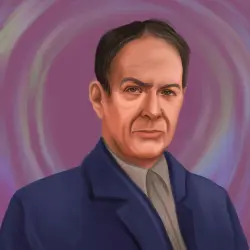



‘The Listeners’ was published in 1912 in de la Mare’s second collection. It is one of his most popular poems and touches on many of the themes and content that the poet is remembered for. He was fond of writing ghost stories, many of which are seen in Eight Tales as well as On the Edge and The Wind Blows Over.
Consider the following tips for better understanding and reading experience:
- Auditory imagery: The poem's nuanced auditory imagery, like the speaker's knocking or the horse's chomping, is crucial to its mysterious, haunting atmosphere. Pay attention to the imagery that creates a sense of certain sounds in the mind and how it enhances the eerie silence directly mentioned in the poem. Try to understand how it creates an interplay of silence and sound to appreciate the poet's deftness in creating the poem's mood.
- Open-ended nature: The poem is ambiguous and lacks contextual clarity, direct ideas, and thematic concerns. However, it reveals details that cannot be connected in a coherent narrative, evoking curiosity and encouraging disparate interpretations. For instance, with nuances like the speaker's promise or the phantom's presence, one can extend the narrative by interpreting the speaker's relationship with the phantoms or analyzing it philosophically, offering an existentialist interpretation. Thus, pay attention to the structure, literary devices, and content with an open mind and effort to originally interpret the poem instead of looking for a central idea or universal theme.
- Literary Context: The poem seems to resonate with gothic literature, which was dominant during the mid-to-late 19th century. Its mysterious setting, supernatural elements, eerie atmosphere, and deeper philosophical implications echo the characteristic features of gothic literature. Try developing an understanding of the gothic literature to interpret the poem in the broader context of a literary genre.
Log in or join Poetry+ to access unlimited Poem PDFs.

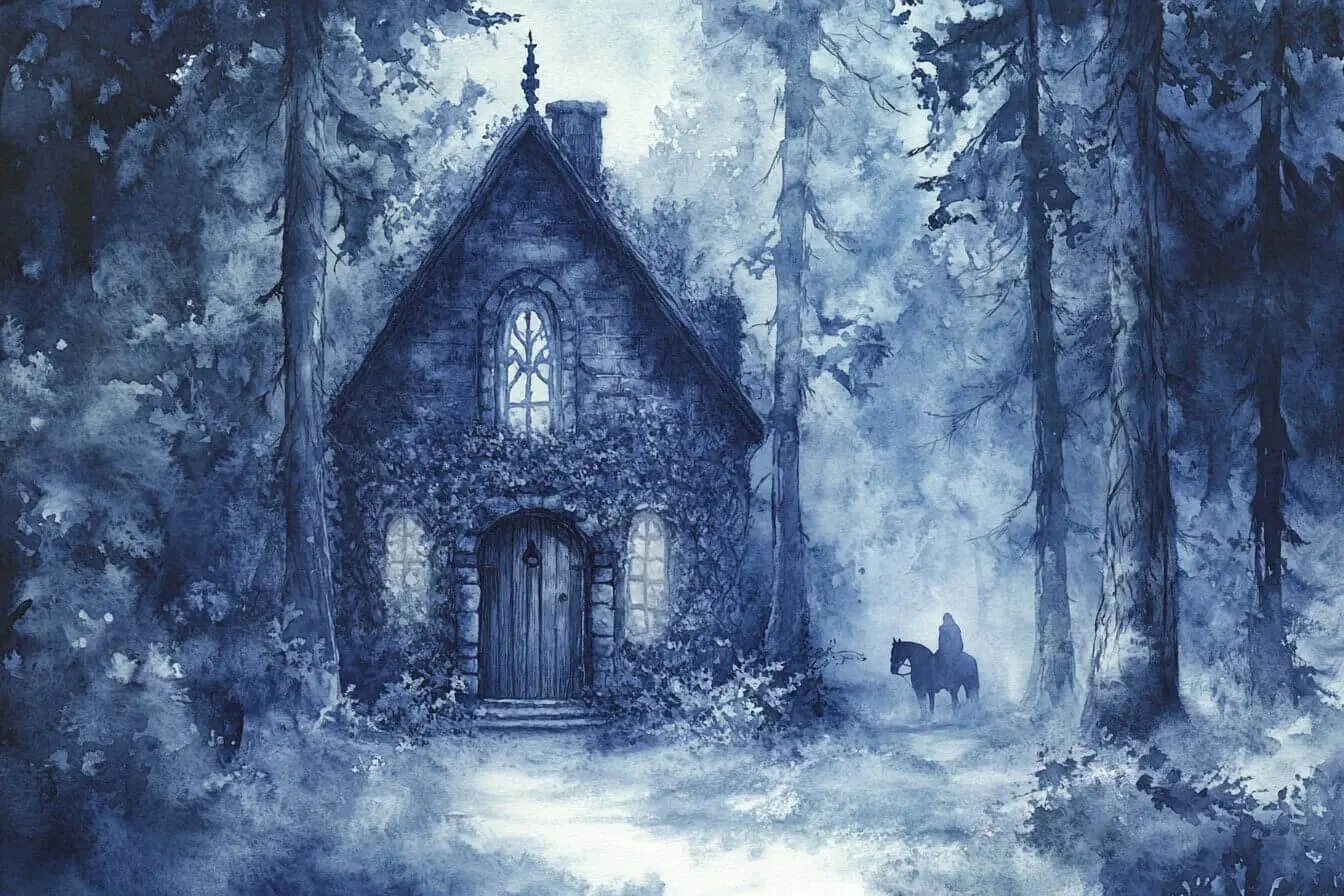
The Listeners Walter de la Mare'Is there anybody there?' said the Traveller, Knocking on the moonlit door; And his horse in the silence champed the grasses Of the forest's ferny floor: And a bird flew up out of the turret, Above the Traveller's head: And he smote upon the door again a second time; 'Is there anybody there?' he said. But no one descended to the Traveller; No head from the leaf-fringed sill Leaned over and looked into his grey eyes, Where he stood perplexed and still. But only a host of phantom listeners That dwelt in the lone house then Stood listening in the quiet of the moonlight To that voice from the world of men: Stood thronging the faint moonbeams on the dark stair, That goes down to the empty hall, Hearkening in an air stirred and shaken By the lonely Traveller's call. And he felt in his heart their strangeness, Their stillness answering his cry, While his horse moved, cropping the dark turf, 'Neath the starred and leafy sky; For he suddenly smote on the door, even Louder, and lifted his head:— 'Tell them I came, and no one answered, That I kept my word,' he said. Never the least stir made the listeners, Though every word he spake Fell echoing through the shadowiness of the still house From the one man left awake: Ay, they heard his foot upon the stirrup, And the sound of iron on stone, And how the silence surged softly backward, When the plunging hoofs were gone.

 Get PDFs
  Fully understand this poem faster with a
Poetry+
membership and get the core resources you need in one place
Fully understand this poem faster with a
Poetry+
membership and get the core resources you need in one place
Summary
‘The Listeners’ by Walter de la Mare describes the actions of a Traveller who knocks on at the door of a seemingly deserted home at night.
The poem begins with the speaker designing the Traveller and his horse. They are at the door of a house on which the Traveller is knocking. He is expecting to be greeted by someone, but no one answers his calls. The narrative moves inside the house where a certain presence resides. There are “phantoms” within the empty building. They “listen” well to the Traveller.
The Traveller can, to some extent, sense them there. He calls out a number of strange phrases that add to the mystery of the poem and then finally leaves without an answer.
Expert Commentary

Insights by Jyoti Chopra
B.A. (Honors) and M.A. in English Literature
Themes
There are several interesting themes in ‘The Listeners’. These include the unknown and the supernatural, as well as isolation and solitude. This mysterious poem touches on all these themes while more broadly speaking, on the strangeness of the world and humankind’s inability to fully understand it. The poem itself is unknowable, keeping the reader far from the real identity of the listeners or what they mean. De la Mare creates a creepy landscape, every element of which is seemingly untouched but also deeply strange. The traveler is forced to navigate this world on his own.
Structure and Form
‘The Listeners’ by Walter de la Mare is a thirty six line poem that is contained within one block of text. The piece follows a consistent pattern of rhyme in the scheme of abcbdefe, and so on, changing end sounds as the poet saw fit. De la Mare chose to create rhyming pairs that are separated by un-rhyming lines. This allows the poem to maintain a certain amount of unity without falling into sing-song-like pattern. Considering that the tone is melancholy throughout, this was a useful choice.
In regards to the rhythm chosen by de la Mare, it is mostly anapestic in nature. This means that there are two unstressed syllables followed by a stressed syllable. It creates a feeling of anxiety in a piece that adds an additional layer to the overwhelming theme of loneliness.
Saying this, the poem’s metrical pattern is more complex than purely anapestic. While anapestic feet appear frequently, de la Mare blends multiple metrical patterns. The predominant rhythm alternates between iambic and anapestic feet, creating an unsettling, wavering quality that mirrors the poem’s supernatural atmosphere. For example, in the line “Is there anybody there?’ said the Traveller,” we see a mix of iambs and anapests. This varied meter enhances the poem’s eerie tone, with the irregular rhythms reflecting both the Traveller’s mounting unease and the ghostly listeners’ otherworldly presence. The metrical variations also mirror natural speech patterns, making the Traveller’s repeated questions sound more authentic while maintaining the poem’s haunting musicality.
Literary Devices
Throughout ‘The Listeners,‘ Walter de la Mare uses several different literary devices. These include but are not limited to enjambment, anaphora, and imagery. The latter is one of the most important devices that’s used in the poem. It can be seen throughout as the poet describes the landscape and the traveler’s experience.
Enjambment is seen through the transitions between lines. For example, between lines ten and eleven. Anaphora is another formal device that’s seen through the repetition of words at the beginning of lines. For example, “And” in lines five and seven, as well as thirty-four and thirty-five.
Analysis of The Listeners
Lines 1-8
‘Is there anybody there?’ said the Traveller,
Knocking on the moonlit door;
And his horse in the silence champed the grasses
Of the forest’s ferny floor:
And a bird flew up out of the turret,
Above the Traveller’s head:
And he smote upon the door again a second time;
‘Is there anybody there?’ he said.
In the first stanza of this piece, the speaker, who does not play a physical role in this narrative, reports the speech of a “Traveller.” Rather than acting as a character in this story, the speaker is a third-person, semi-omniscient narrator. He is able to look down on the action and report it back to the reader.
The Traveler is knocking on a door at night. Space is said to be lit by “moonli[ght]” and filled with silence. These few describing phrases paint an immediate picture of the scene. A reader will be able to imagine the door, the sky, and the sound of the “horse” as it “champed the grasses.” This sound would be deafening in the silence.
The reader should feel the tense expectations of the Traveler as he waits to see if someone will open the door. The noise of the horse’s hooves on the ground is emphasized by the fact that they are standing on “the forest’s ferny floor.”
The environment they are in is covered in plants. This leads a reader to the supposition that the Travellers are not somewhere very industrialized. The landscape is primarily natural. As if hoping to prove this is the case, a bird is described as flying out of the “turret.”
So far, the reader has only gotten a few details about the structure on which the Traveller is knocking. It is out in the woods, and it has a “turret” or tower. This leads one to believe that it is a large building or even a castle-like home. There is an overwhelming sense of mystery in these opening lines. This comes partially from the fact that the poem begins in medias res or in the middle of the scene. There has been no introduction or explanation for what is occurring.
The Traveller decides that he will “smote upon the door again.” In this context, “smote” means to strike with force. He is not being tentative about his desire to gain entry into the building. Again, the Traveller calls out:
‘Is there anybody there?’
This proves that although the Traveller might be confident enough to knock hard on the door, he is still unsure about whether or not there is actually anyone home.
Lines 9-16
But no one descended to the Traveller;
No head from the leaf-fringed sill
Leaned over and looked into his grey eyes,
Where he stood perplexed and still.
But only a host of phantom listeners
That dwelt in the lone house then
Stood listening in the quiet of the moonlight
To that voice from the world of men:
In the second set of lines, the speaker describes how there is no one there to greet the Traveller. He waits, but no one “descend[s].” In a line that proves that the abode is somewhere in the woods, the speaker states that,
No head from the leaf-fringed sill
Leaned over
The window that the traveler would expect the resident of the home to appear in, remains empty. There is still no sign that anyone is present inside the building or willing to let him in. A reader is also given the additional detail of the Traveller’s eyes being “grey.” They portray his emotions well. He is now “perplexed” by his situation. Perhaps he had some reason to expect that there would be someone there. The Traveller remains “still” standing where he is.
He is still waiting, expectantly. But there is nothing to be heard. The only others present are the,
[…] phantom listeners
That dwelt in the lone house then
These lines make clear that the house is, in fact, empty. There is no one inside ignoring the Traveller’s knocking and shouting. This section also emphasizes the solitary nature of the moment. The traveler is completely alone, aside from his horse. No one can even hear his voice.
Lines 17-24
Stood thronging the faint moonbeams on the dark stair,
That goes down to the empty hall,
Hearkening in an air stirred and shaken
By the lonely Traveller’s call.
And he felt in his heart their strangeness,
Their stillness answering his cry,
While his horse moved, cropping the dark turf,
’Neath the starred and leafy sky;
At approximately the halfway point of this piece, the speaker returns to the image of the “phantoms” that he sees as being the only inhabitants of the house. They move through the “empty hall” and take to the stairs as any normal resident would. These ghostly images do not make an impact on their world. They are unable to respond to the “Traveller’s call,” although they can hear it. The air around them is “stirred and shaken” by the sounds he makes.
The narrative returns to the heart of the traveler. He suddenly feels strange, as if he knows there are “phantoms” inside who are listening to his words. It is the quiet of the house that “answer[s] his cry.” This fact inspires him to try again.
Lines 25-32
For he suddenly smote on the door, even
Louder, and lifted his head:—
‘Tell them I came, and no one answered,
That I kept my word,’ he said.
Never the least stir made the listeners,
Though every word he spake
Fell echoing through the shadowiness of the still house
From the one man left awake:
The speaker “smote on the door” once more. This time, with more force. He makes his knocks “Louder.” After, he lifts his head up to the window that was mentioned in a previous line and calls out. The words he speaks increase the mystery of the entire narrative. He asks that the presence he feels inside the house, “Tell them I came.” As one would expect, there is no answer. He follows this up with another phrase, “That I kept my word.”
There is no revelatory statement following up these odd words to explain the situation. This is both a negative and a positive. While one’s personal curiosity will not be sated, one is able to craft any narrative one wants on top of de la Mare’s.
The final lines of this section describe how the words “he spake” fell through:
[…] the shadowiness of the still house
The sounds are reaching no one with the capacity to respond to them. They dissolve into the shadows.
Lines 33-36
Ay, they heard his foot upon the stirrup,
And the sound of iron on stone,
And how the silence surged softly backward,
When the plunging hoofs were gone.
In the final four lines, the speaker returns to the “phantom” or “phantoms” who are listening. By the time the Traveller leaves the front of the house, there is only one “man left awake.” This single listener took note of the Traveller’s “foot upon the stirrup” of his saddle. The phantom heard the passing of the silence as the man moved away until there was nothing.
Readers of this piece are left to wonder what exactly happened in the last thirty-six lines. There are a number of different interpretations which could be posed. Perhaps those who the speaker came to see have passed on and are now the “phantoms” watching silently inside.
Those the Traveller was seeking out could’ve moved on to another location, leaving behind remnants of themselves or allowing other entities to take up residence there.
Beyond these literal interpretations is a general theme of loneliness. The Traveller is in a solitary state throughout the piece, and the forces inside the house represent loneliness in their very being.
Similar Poetry
In the same vein as ‘The Listeners’ are other poems such as ‘Astrophobos’ by H.P. Lovecraft, ‘The Black Heralds‘ by César Vallejo ‘The Vampire’ by Conrad Aiken, and ‘The Witch’ by Mary Elizabeth Coleridge. Each of these poems deals with the unknown and the supernatural in a different way. They all raise questions for the reader that go unanswered by the end of the poem while also dealing with imagery that is certainly unnerving.